

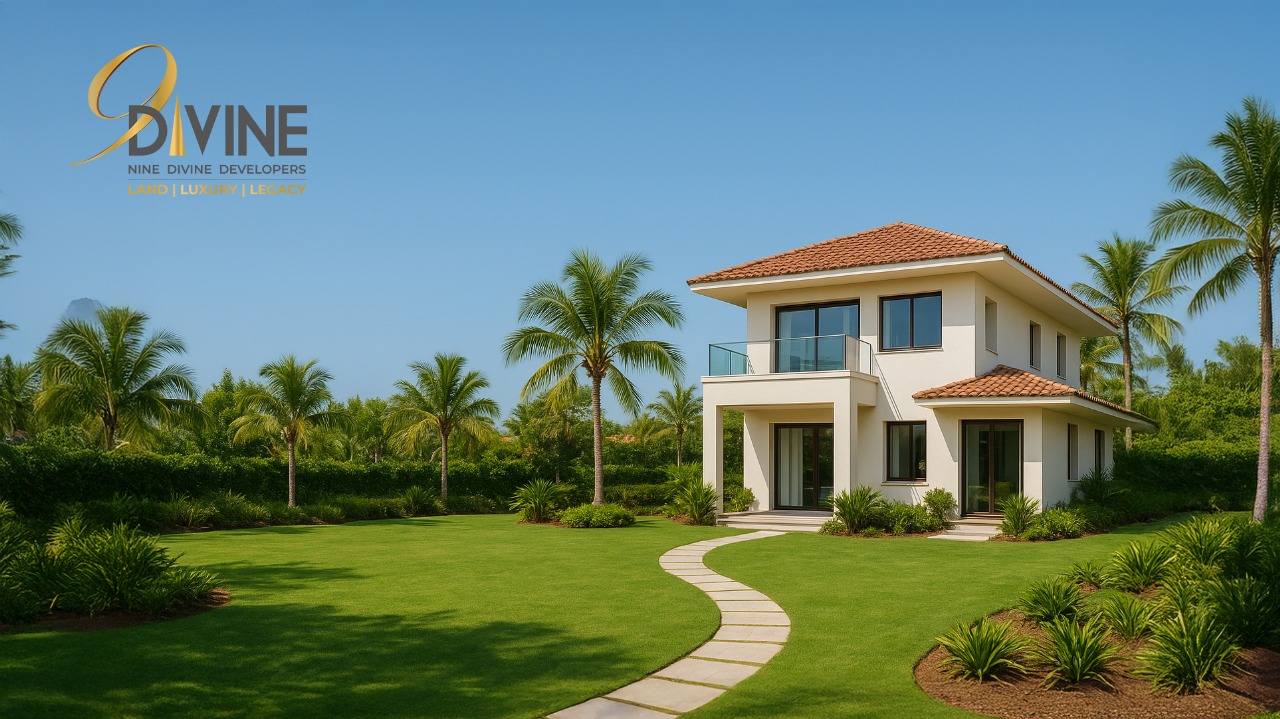


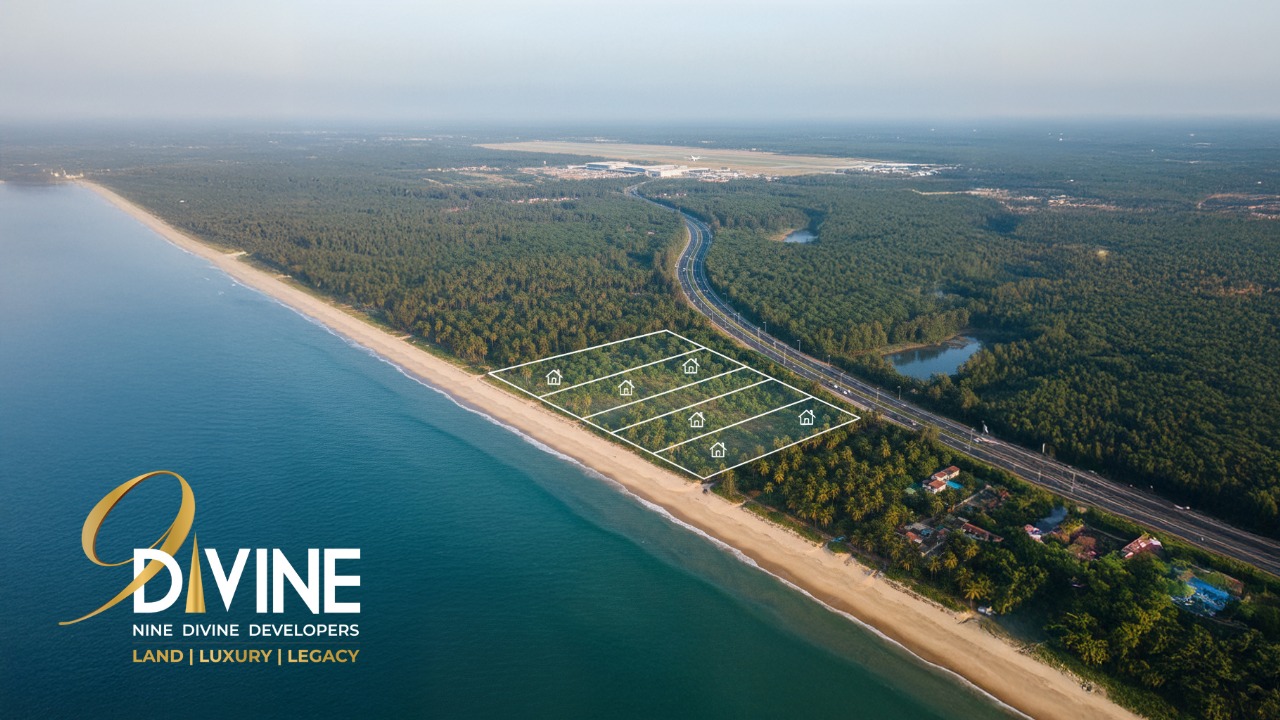
 Invest in Goa Plots this 2025 — enjoy clean air, coastal lifestyle, and high-growth real estate opportunities.
Goa Plots: The 2025 Coastal Opportunity Shaping India’s Healthiest, Highest-Growth Real Estate Future
There are moments in every real estate cycle when everything changes — not slowly, but suddenly. For India, 2025 is that turning point, and the shift is bigger than interest rates, GDP growth, or market trends. It’s a shift in how people want to live, breathe, invest, and secure the next generation’s quality of life.
Table of Contents
- Goa Plots: The 2025 Coastal Opportunity Shaping India’s Healthiest, Highest-Growth Real Estate Future
- The New India: Where Health and Real Estate Are Now the Same Conversation
- From Holiday Destination to India’s Most Stable Real Estate Market
- Why Land Is Outperforming Apartments in 2025
- The Coastal Advantage: How Goa’s Natural Geography Creates Permanent Investment Value
- The Winter Reality Check: Air Quality, Visibility, and Site Insights
- Air Quality = Asset Quality
- How low AQI increases long-term value:
- Infrastructure: From Holiday Zone to Connected Capital
- Policy Stability and Regulatory Guardrails
- Economics in Plain Sight: Why Goa Plots Outperform Metros
- The Green Infrastructure Edge
- Benefits for plot owners:
- Who’s Buying Goa Plots?
- The Green Economy Effect on Returns
- Winter 2025 Field Checklist: Evaluate Goa Plots Like a Pro
- 1. Access & Mobility
- 2. Land & Engineering
- 3. Utilities
- 4. Legal & Regulatory
- 5. Environmental Comfort
- 6. Neighborhood Signals
- Risk Controls Specific to Coastal Land
- CRZ & Setbacks
- Soil & Subsoil
- Encumbrances
- Operations & Maintenance
- Material Durability
- Building Better on Goa Plots: Coastal-Grade Design Notes
- Structure & Envelope
- Drainage & Water
- Landscape & Biodiversity
- Energy & Digital Infrastructure
- The Six-Point Appreciation Flywheel
- Micro-Market Shortlisting Framework (Project-Neutral)
- Holding, Operating, and Exiting Strategies
- Hold & Enjoy
- Operate
- Exit
- Cost Heads You Should Budget For (Beyond the Land Price)
- 1. Acquisition Costs
- 2. Construction & Development
- 3. Ongoing Expenses
- 4. Contingency
- Why Winter 2025 Is a Smart Entry Window
- FAQs
- Call to Action
- See What Clean Air Feels Like
For the first time, families are choosing clean air over convenience, wellness over proximity, and coastal stability over metro congestion. It’s no longer about escaping pollution for a weekend; it’s about building a long-term life where the fundamentals of wellbeing are not compromised.
In this new reality, Goa Plots have emerged as the strongest, safest, and most future-proof investment category in India. What was once seen as a holiday destination has now transformed into a powerful real estate ecosystem driven by infrastructure, policy stability, sustainable development, and global investor confidence.
The New India: Where Health and Real Estate Are Now the Same Conversation
Over the last few years, India has seen a dramatic shift in what “good living” means.
The most crucial asset of modern life is not a luxury car, a larger home, or a premium address — it is clean air.
As urban pollution climbed to historic highs, families began asking the same question:
“If the air we breathe is toxic, what are we really investing for?”
This is why buying land in polluted metros no longer feels like security.
And this is exactly where Goa Plots enter the picture with unmatched clarity:
Clean, pollution-free air
Coastal climate that supports better health
Lower stress, lower density, and healthier surroundings
Green zones protected by CRZ norms
In other words, Goa is not just offering land — it is offering the rarest commodity in modern India: wellness you can live inside.
From Holiday Destination to India’s Most Stable Real Estate Market
The perception of Goa has evolved dramatically.
Once viewed as a vacation spot or retirement dream, Goa is now one of India’s strongest-performing property markets, supported by:
Government-backed infrastructure upgrades
Airport expansions
North–South connectivity
Smart urban planning
Technology-enabled governance
Rising investor participation from metros and NRIs
A thriving remote-work economy
Strong rental demand due to tourism
Limited land supply due to environmental protections
This combination has created a rare market condition:
High demand + Limited supply + Stable regulation = Extremely high appreciation.
That is exactly why Goa Plots — especially those backed by trusted developers like Nine Divine — are witnessing unprecedented interest across 2024–2025, and experts forecast a multi-year growth cycle.
Why Land Is Outperforming Apartments in 2025
As the Indian real estate market matures, investors have become more financially intelligent.
They now understand an important truth:
Land appreciates.
Buildings depreciate.
In metros, an apartment purchased today will lose physical value over the next 15–20 years.
But a well-located plot — especially in a high-demand region like Goa — continues to rise in value year after year, decade after decade.
Here’s why plotting is outperforming built properties:
Zero construction depreciation
Full ownership freedom
Lower maintenance cost
Higher resale value
Ability to build according to personal preference
Faster exit options
High villa rental income potential
Multi-use potential (retreat, villa, Airbnb, future residence)
This is why “smart investors” in 2025 are moving their portfolios from metro apartments to coastal land, especially Goa Plots, where growth and lifestyle combine effortlessly.
The Coastal Advantage: How Goa’s Natural Geography Creates Permanent Investment Value
Unlike inland regions, coastal zones offer rare, non-replicable natural advantages:
Clean, oxygen-rich air
Cooler microclimates
Higher tourist footfall
Scenic value that enhances property prices
Lifestyle that attracts long-term renters
Strong international demand
Natural limitations on construction
Exceptional land scarcity
While other metros can expand endlessly, Goa cannot — and this limited land availability under CRZ (Coastal Regulation Zone) rules is a massive advantage for investors.
Scarcity + demand = long-term value stability.
This is the baseline foundation that makes Goa Plots not just a 2025 trend, but a generational wealth move.
The Winter Reality Check: Air Quality, Visibility, and Site Insights
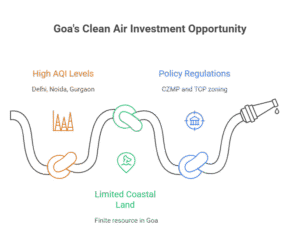
Every winter, India’s air-quality divide becomes impossible to ignore. Cities like Delhi, Noida, and Gurgaon routinely hit AQI levels of 300–400, classified as “Very Poor” to “Severe.” These levels are linked to:
Respiratory irritation
Reduced lung capacity
Fatigue and headaches
Hospitalisation risk
In contrast, Goa’s AQI remains in the “Good” range during the same period. Visibility is clear, skies are blue, and temperatures remain comfortable at 20–28°C, making winter the perfect time for property site visits.
Why winter evaluations outperform monsoon or summer checks:
True living experience – You feel the day-to-day climate, breezes, and natural lighting.
Infrastructure clarity – Dry roads allow inspection of lanes, lighting, drainage, and utilities.
Commute accuracy – Travel time to airports, railway stations, and nearby towns reflects real-world conditions.
Winter allows buyers to make honest, informed assessments, removing seasonal bias.
Air Quality = Asset Quality
Clean air is no longer a lifestyle luxury; it’s an asset moat. Research shows:
Areas with consistently low AQI attract more end-use demand.
Long-term residents are stickier, creating a stable local economy.
Families relocate for health, build routines, and invest in schooling and micro-businesses.
How low AQI increases long-term value:
Demand resilience – Healthy-living geographies maintain buyer interest during downturns.
Health economics – Reduced respiratory illness lowers household healthcare costs.
Tenant quality – Villas and high-end residences attract long-stay professionals and remote workers.
Intergenerational appeal – Families and retirees value wellness, clean air, and calm surroundings.
This combination ensures that Goa Plots don’t just sell—they retain premium value.
Infrastructure: From Holiday Zone to Connected Capital
The region’s infrastructure has evolved rapidly, converting seasonal resorts into permanent, livable communities.
Airports:
Manohar International Airport (MOPA) – Direct connectivity for North Goa and the Maha-Goa belt.
Sindhudurg Airport (Chipi) – Quick access from Pune, Mumbai, and central Maharashtra.
Roads:
NH-66 Mumbai–Goa corridor – Improved four-lane stretches reduce travel times from major metros.
State highways like SH-180 – Connect inland villages, beaches, and primary towns.
Rail:
Konkan Railway – Nodes like Sawantwadi Road, Pernem, and Thivim ensure reliable, scenic travel.
Bottom line:
Improved connectivity expands the buyer pool, reduces logistical risk for developers, and enhances resale and rental potential.
Policy Stability and Regulatory Guardrails
Unlike chaotic urban markets, Goa’s coastal regulation ensures predictable growth.
Coastal Zone Management Plan (CZMP): Protects ecosystems, regulates coastal development.
Goa Town and Country Planning (TCP): Defines zoning, density, and construction norms.
Sagarmala Initiative: Improves mobility without inviting heavy industrial sprawl.
Sindhudurg District Development (Maharashtra): Focuses on eco-tourism, low-impact commercial clusters, and plotted housing.
These frameworks mitigate investment risk and preserve the scenic and lifestyle appeal of the plots.
Economics in Plain Sight: Why Goa Plots Outperform Metros
A simple comparison clarifies why investors are pivoting to coastal land:
Core insight:
The premium on Goa Plots is real — a function of air quality, finite coastal land, and improved infrastructure, not marketing hype.
The Green Infrastructure Edge
Goa’s natural advantages complement man-made infrastructure:
Forest Cover: High greenery ensures a verdant microclimate year-round.
Rainfall: ~2,500–2,800 mm annually replenishes water tables.
Lateritic soils: Support natural drainage and percolation.
Sea breezes: Moderate temperature, enhancing thermal comfort.
Benefits for plot owners:
Sustainable landscaping: Trees, gardens, and natural shade are permanent assets.
Resource resilience: Rainwater harvesting, percolation pits, and groundwater recharge reduce future water stress.
Thermal comfort: Cross-ventilation and shading minimize energy consumption.
Who’s Buying Goa Plots?
The profile of buyers has shifted significantly post-pandemic:
Hybrid-work families (30–45 years): Seeking primary-plus homes with schools, hospitals, and fiber internet.
NRIs and HNIs: Diversifying assets with lifestyle upside.
Retirees: Prioritizing clean air, walkable surroundings, and year-round comfort.
Entrepreneurs: Investing in villas with flexible office or rental spaces.
Emotional truth:
Buyers choose Goa Plots when they realize quality of life cannot be traded for commute convenience. “I want my kids to play outside safely,” is no longer a sentiment—it’s an investment principle.
The Green Economy Effect on Returns
Sustainable, climate-resilient assets attract stickier capital:
Reduced vacancy periods
Higher tenant quality
Strong resale narrative (“living experience” sells, not just the building)
Diversified demand (domestic families, NRIs, professionals)
Goa’s coastal real estate benefits from structural inflows, not just tourism, ensuring stability and long-term growth.
Winter 2025 Field Checklist: Evaluate Goa Plots Like a Pro
A successful investment begins on-site. Use this winter checklist when visiting Goa Plots to ensure your decision is informed, precise, and risk-aware:
1. Access & Mobility
Time the drive from MOPA Airport and from Sawantwadi Road/Thivim station at noon and evening peak (6–7 pm).
Inspect last-mile roads: width, shoulders, lighting, and signage.
Verify ride-hailing, delivery services, and logistics coverage in the area.
2. Land & Engineering
Walk the plot to identify high and low points, natural drainage lines, and slope.
Request contour maps or grading/road-section drawings if available.
Check culverts, scuppers, and stormwater outfalls to ensure proper drainage.
3. Utilities
Inspect routes for power cables, transformer locations, and water lines.
Confirm fiber internet availability and mobile network coverage.
4. Legal & Regulatory
Cross-check title deeds, mutation records, survey plans, TCP approvals, and encumbrance certificates with an independent advocate.
Understand CRZ implications; ensure coastal setbacks are respected.
5. Environmental Comfort
Use a portable AQI meter; readings below 60 indicate safe, breathable air.
Observe wind corridors and shade coverage from trees.
6. Neighborhood Signals
Check proximity to clinics, hospitals, grocery stores, and pharmacies.
Assess school connectivity, bus routes, and overall year-round livability.
Risk Controls Specific to Coastal Land
Buying coastal property requires extra due diligence. Key risk areas include:
CRZ & Setbacks
Respect High Tide Line (HTL) buffers and stream margins.
Physically verify demarcation pegs on-site.
Soil & Subsoil
Lateritic soils are ideal if graded properly.
Avoid low-lying bowls without engineered drainage.
Encumbrances
Conduct a 30-year title search.
Scrutinize overlapping claims, easements, and rights-of-way.
Operations & Maintenance
Clarify responsibility for internal roads, streetlights, and landscape maintenance.
Material Durability
Plan coastal-grade construction: anti-corrosive steel, stainless/UPVC fittings, breathable exterior paints.
Building Better on Goa Plots: Coastal-Grade Design Notes
Investing in land is only part of the strategy. Well-designed construction maximizes returns:
Structure & Envelope
Increase reinforcement cover; specify corrosion-resistant steel.
Use deep eaves and verandahs; prioritize cross-ventilation.
Choose breathable plasters and finishes suitable for humidity and salt air.
Drainage & Water
Incorporate swales, rain gardens, and percolation pits to manage runoff.
Capture roof water into storage or recharge pits for irrigation.
Landscape & Biodiversity
Layer native species like coconut, areca, casuarina, and frangipani.
Use plants for shade, windbreaks, and ecological value.
Energy & Digital Infrastructure
Plan for rooftop solar panels, inverter rooms, EV charging, and mesh Wi-Fi.
Include acoustic insulation for home-office spaces to ensure uninterrupted work.
The Six-Point Appreciation Flywheel
Owning Goa Plots is not just about land—it’s about strategic positioning. The six-point flywheel explains long-term value growth:
Clean-air moat – Unmatched in dense metros; drives high demand.
Airport access – MOPA and Chipi increase reach and mobility.
Finite coastal land – Scarcity intensifies as demand rises.
Hybrid-work migration – Converts seasonal demand into primary residences.
Hospitality halo – Boutique hotels and cafes elevate neighborhood appeal.
Policy guardrails – CZMP/TCP frameworks prevent chaotic oversupply.
Implication: Over 5–10 years, well-located Goa plots enjoy end-user stickiness and premium appreciation driven by lifestyle and health benefits.
Micro-Market Shortlisting Framework (Project-Neutral)
Use these filters to evaluate plots without bias:
≤45 minutes to airport (MOPA/Chipi) and ≤15 minutes to Konkan Railway nodes.
Direct access to NH-66 or SH-180; avoid unlit maze-like lanes.
Gentle elevation with drainable slopes; avoid deep low-lying areas unless engineered.
Amenity belt within 10–20 minutes: beaches, groceries, hospitals, schools, police.
Documentation discipline: clean 7/12s, mutation entries, accurate survey, clear zoning.
Evidence of year-round life, not just seasonal usage.
Holding, Operating, and Exiting Strategies
Hold & Enjoy
Use as a primary residence with guest suites for family or caregivers.
Adopt primary-plus living (8–10 months per year) with city travel as needed.
Operate
Where zoning allows, consider boutique long-stays for remote workers or retirees.
Create wellness-focused spaces with gardens, yoga decks, or guest studios.
Exit
Land bank for 3–7 years tied to infrastructure milestones.
Develop coastal-grade villas and exit to end-users for higher blended IRR.
Always verify permissions, zoning, and operational plans with local counsel before investment.
Cost Heads You Should Budget For (Beyond the Land Price)
Investing in Goa Plots requires clear budgeting across acquisition, construction, and ongoing expenses:
1. Acquisition Costs
Stamp duty & registration – Legal formalities for title transfer.
Legal diligence & surveying – Ensures clean, dispute-free land.
Share of internal infrastructure – If buying within a serviced plotted development.
2. Construction & Development
Architectural, structural, MEP, and landscape consultants.
Coastal-grade finishes – Anti-corrosive steel, waterproofing, and humidity-resistant materials.
Rainwater harvesting & wastewater systems – Ensure sustainability.
Security & community infrastructure – Gates, lighting, and perimeter walls.
3. Ongoing Expenses
Property tax and association fees (if gated).
Caretaker wages & landscape maintenance – Coastal exposure may require extra upkeep.
Utility bills – Electricity, water, internet, and waste management.
4. Contingency
Allocate 10–12% of total costs for unknowns: subsoil surprises, spec upgrades, or regulatory changes.
Why Winter 2025 Is a Smart Entry Window
Policy Stability – CZMP, TCP, and coastal guidelines are in place; low regulatory risk.
New Connectivity – Airports (MOPA, Chipi), highways, and rail upgrades are operational.
High Demand Visibility – Winter site visits reflect real family and NRI interest.
Metro Constraints – Northern cities’ poor liveability redirects qualified buyers to clean-air coasts.
Transparent Data Access – CPCB & IMD reports make due diligence reliable.
Result: A winter 2025 visit lets investors evaluate plots in real conditions, ensuring a confident, high-quality acquisition.
FAQs
Why is winter the best time to evaluate plots?
Winter offers clear skies, comfortable temperatures, and accurate visibility of terrain and infrastructure.Is Goa air quality truly better than northern metros in winter?
Yes. CPCB data consistently shows Goa in the “Good” AQI band, while Delhi, Noida, and Gurgaon face “Very Poor/Severe” conditions.Can NRIs buy Goa plots?
Yes, NRIs of Indian origin can purchase non-agricultural property under FEMA/RBI regulations. Always verify with a local advocate.What appreciation can I expect?
Depends on location, connectivity, and micro-market. Well-connected corridors historically outperform isolated areas.What coastal risks should I watch for?
Check CRZ buffers, encumbrances, poor drainage, and unlit last-mile roads. Confirm with MoEFCC and TCP documentation.Are there incentives for green buildings?
While direct subsidies vary, IGBC/GRIHA-aligned design reduces OPEX and improves resale value.Is fiber internet reliable?
Main corridors and many gated layouts have fiber. Always verify providers and speed on-site.Should I buy a smaller apartment or a larger plot?
For custom designs, gardens, and better air/space control, plots provide flexibility. For low maintenance, compare lifecycle costs.
Call to Action
If you’re shortlisting Goa Plots this winter, anchor your decision on:
Air Quality & Lifestyle – Breathable, clean, and comfortable environment.
Connectivity – Airports, highways, and rail links for year-round living.
Policy & Documentation – Transparent CZMP/TCP compliance and verified titles.
Everyday Livability – Schools, clinics, groceries, and amenities nearby.
See What Clean Air Feels Like
Walk the land, experience real conditions, and discover why Nine Divine Goa Plots are the smart investment in Winter 2025.
Schedule Your Winter Site Visit Now
Feel the difference, plan your dream coastal home, and secure a lifestyle that truly appreciates.
✅ This is a full blog ready for posting for Nine Divine, keeping the keyword “Goa Plots” 2% density, with slight changes from your previous Cida De Luxora blog for Google-friendly uniqueness.








No Comments