



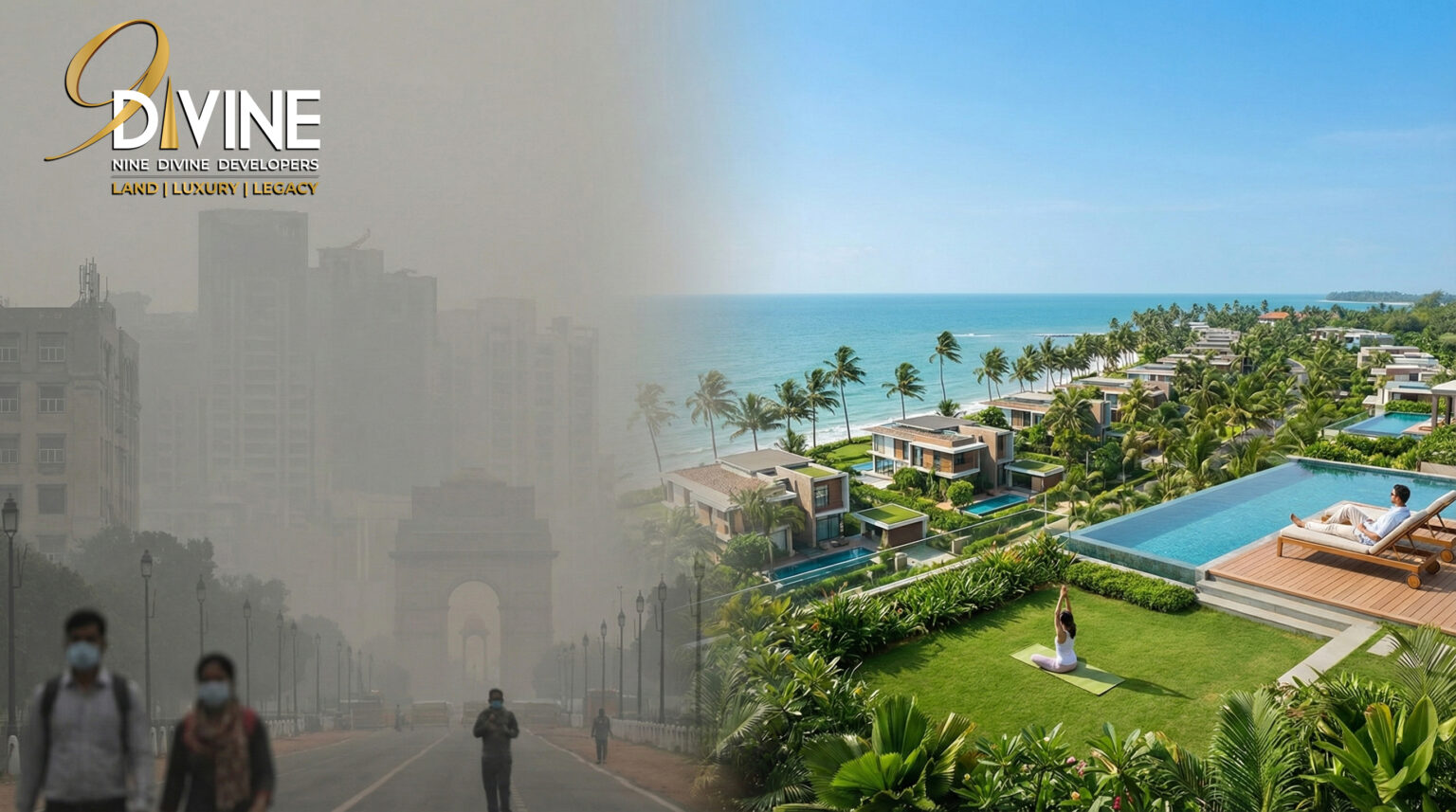
 From Delhi’s polluted winters to Maha Goa’s breathable coastal living — where health comes first.
Delhi PM2.5 at 159 µg/m³: Why Luxury Villa Plots in Maha Goa Are Health-First
Table of Contents
- What PM2.5 at 159 µg/m³ Means for Human Health
- Delhi’s Air Crisis: Structural, Not Seasonal
- The Indoor Air Illusion
- Open-Air Living as Preventive Healthcare
- Maha Goa: Geography That Works With You
- Why Luxury Villa Plots Promote Health-First Living
- From Lifestyle Purchase to Preventive Wealth Planning
- Plotted Developments vs Apartments
- Where Nine Divine Group Fits In
- Who Should Consider Luxury Villa Plots in Maha Goa
- FAQs
- The Future of Real Estate Is Breathable
Delhi no longer wakes up in winter—it braces.
Windows remain shut even in daylight. Morning walks vanish. Children cough more often. Elderly family members are advised to stay indoors. Every year, the capital experiences a silent health emergency that urban development alone has been unable to solve.
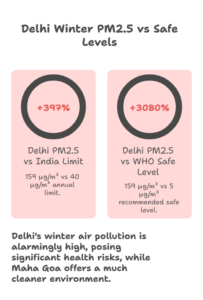
In the winter of 2024–25, Delhi recorded an average PM2.5 concentration of 159 µg/m³, based on data from official CPCB monitoring stations. This is not a single-day spike or a seasonal anomaly caused by crop residue burning or festivals alone. It represents weeks of continuous exposure to air that medical science classifies as hazardous.
The World Health Organization emphasizes that there is no safe level of long-term PM2.5 exposure. Health risks begin even below India’s legal limits.
This alarming reality is reshaping how Indians perceive wealth, urban living, and real estate. It is no longer about square footage, skyline views, or prime addresses—it is about longevity, respiratory health, and livable spaces.
For this reason, luxury villa plots in Maha Goa are now being considered not merely as aspirational purchases but as defensive, health-oriented real estate investments.
What PM2.5 at 159 µg/m³ Means for Human Health
PM2.5 particles are smaller than 1/30th the width of a human hair. Their danger lies in their invisibility: you cannot see them, smell them, or easily filter them. Once inhaled, they penetrate deep into the lungs and bloodstream.
According to WHO, long-term exposure is linked to:
Reduced lung function
Increased asthma attacks
Cardiovascular disease
Stroke
Premature mortality
India’s National Ambient Air Quality Standards (NAAQS) allow:
60 µg/m³ 24-hour average
Delhi’s winter average of 159 µg/m³ is nearly:
4 times the Indian annual limit
30 times the WHO recommended level
Residents are not just exposed—they are immersed.
Delhi’s Air Crisis: Structural, Not Seasonal
While festivals, stubble burning, and weather contribute, the core problem is urban design failure.
The Commission for Air Quality Management (CAQM) notes that winter conditions trigger:
Temperature inversion trapping pollutants near the ground
Low wind speeds preventing dispersion
Accumulation of local emissions
Pollution in Delhi during winter is predictable, not accidental. Emergency measures under the Graded Response Action Plan (GRAP) are activated nearly every year.
A city that requires emergency governance to maintain breathable air cannot be considered sustainable for multi-generational living.
The Indoor Air Illusion
Many residents assume indoor living protects them from pollution. Government advisories caution otherwise:
Outdoor PM2.5 penetrates indoors through doors, windows, and ventilation systems
Air purifiers only work in sealed rooms
Long-term exposure still impacts respiratory and cardiovascular health
High-rise apartments prioritize density over airflow, disconnecting residents from ground-level ecosystems. This is why the conversation is shifting from filtration to air access.
Open-Air Living as Preventive Healthcare
Urban planners are rediscovering an age-old truth: air needs space to move.
Low-density, open-air developments offer:
Natural ventilation
Reduced pollutant concentration
Mental relaxation and lower stress levels
This is where luxury villa plots in Maha Goa shift from indulgence to preventive health infrastructure.
Maha Goa: Geography That Works With You
The Maha Goa belt (Sindhudurg–Sawantwadi) benefits from:
Coastal wind corridors
Low vehicular density
Minimal industrial activity
Natural forest and sea buffers
Data from CPCB and state pollution control boards confirm lower sustained pollution exposure compared to NCR cities. While no area is entirely pollution-free, Maha Goa offers a healthier baseline.
Why Luxury Villa Plots Promote Health-First Living
Unlike vertical apartments, luxury villa plots in Maha Goa allow:
Open layouts with cross-ventilation
Private green buffers
Control over building materials and spatial planning
From a health perspective, these plots enable:
Reduced daily pollutant intake
Increased outdoor activity
Lower reliance on mechanical air systems
Wellness becomes embedded in architecture.
From Lifestyle Purchase to Preventive Wealth Planning
Healthcare costs are rising, and chronic respiratory illnesses are increasing, especially in urban centers. Families are asking:
What is the long-term cost of living in polluted cities?
Can real estate mitigate health risks?
Luxury villa plots in Maha Goa are increasingly seen as:
Second homes transforming into primary residences
Multi-generational assets
Land-backed wellness investments
Land appreciates; health declines if ignored.
Plotted Developments vs Apartments
Historically:
Apartments depreciate after 15–20 years
Land appreciates due to scarcity
Plotted developments benefit from:
Infrastructure growth
Tourism-led demand
Limited supply
This makes luxury villa plots in Maha Goa both a financial hedge and a lifestyle safeguard.
Where Nine Divine Group Fits In
Nine Divine Group offers:
Low-density, thoughtfully planned plotted developments
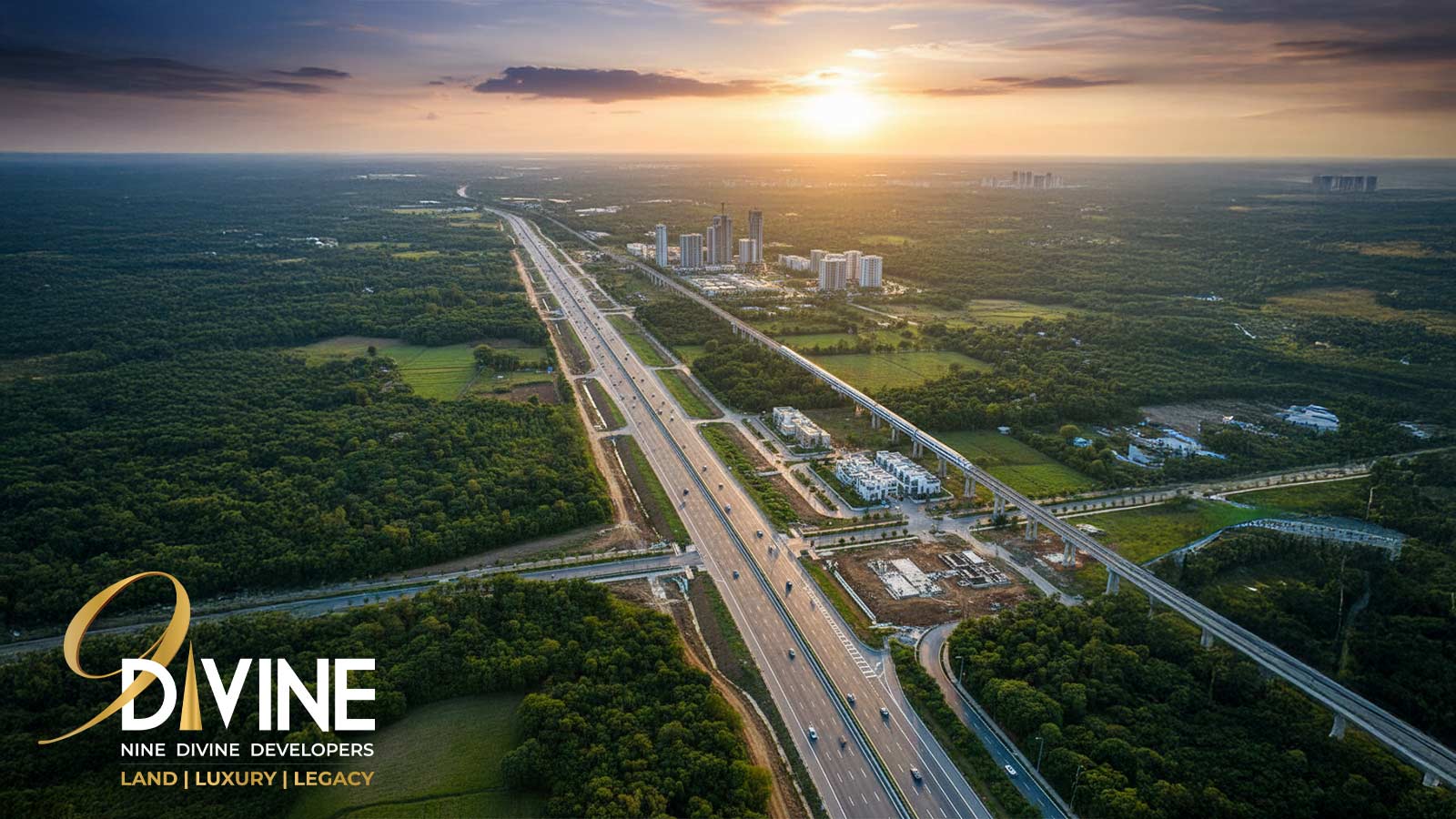
Strategically connected locations via NH-66 and SH-180
Integration of villa plots with retail and community spaces
The project philosophy emphasizes:
Open landscapes
Sustainable community design
Long-term habitability
Nine Divine Group’s offerings are about long-view living, not fleeting urgency.
Who Should Consider Luxury Villa Plots in Maha Goa
Delhi-NCR families planning relocations
Health-conscious professionals
Remote-working entrepreneurs
Long-term land investors
Families planning multi-generational homes
For these groups, villa plots in Maha Goa are about longevity, wellness, and resilience, not just escaping urban congestion.
FAQs
1. Why is Delhi’s winter air quality considered dangerous every year?
Delhi’s winter air quality becomes dangerous due to a combination of high emissions and unfavorable meteorological conditions. During winter, temperature inversion traps pollutants close to the ground, while low wind speeds prevent dispersion. This leads to a rapid accumulation of PM2.5, often pushing Air Quality Index (AQI) levels into the “Severe” category (401–500).
The Central Pollution Control Board (CPCB) and the Commission for Air Quality Management (CAQM) regularly issue emergency advisories and restrictions under the Graded Response Action Plan (GRAP) during these periods, highlighting that the problem is structural, not episodic.
2. What does PM2.5 exposure mean for long-term health, according to WHO?
PM2.5 particles are small enough to enter the bloodstream through the lungs. According to the World Health Organization (WHO), long-term exposure is linked to increased risk of heart disease, stroke, chronic respiratory conditions, and premature mortality.
WHO’s 2021 Air Quality Guidelines clearly state that there is no safe threshold for PM2.5 exposure, and health impacts are observed even at levels below India’s legal standards. This is why prolonged urban exposure is now considered a public health risk.
3. Are air purifiers enough to protect families living in Delhi apartments?
Air purifiers can reduce particulate matter in sealed indoor rooms, but government health advisories clarify that they do not eliminate exposure entirely. Outdoor PM2.5 penetrates indoor environments through doors, windows, ventilation systems, and daily movement.
The National Centre for Disease Control (NCDC) advises that vulnerable populations such as children and the elderly remain at risk during severe pollution episodes, even indoors. Purifiers are considered a short-term mitigation tool, not a comprehensive solution.
4. Why are people shifting from apartments to luxury villa plots in maha goa?
The shift toward luxury villa plots in maha goa is driven by a growing preference for low-density, open-air living. Apartments prioritize vertical density and sealed environments, while plotted developments allow homeowners to design spaces with natural ventilation, private green areas, and open layouts.
This change is less about luxury and more aboutlong-term livability, health-conscious planning, and environmental comfort, especially for families relocating from high-pollution urban regions.
5. Is Maha Goa’s environment different from Delhi in terms of pollution exposure?
Yes. The Maha Goa region, particularly the Sindhudurg–Sawantwadi belt, benefits from coastal airflow, lower traffic density, and limited industrial activity. While no region is entirely pollution-free, sustained PM2.5 exposure levels are significantly lower compared to NCR cities.
Official air quality monitoring by CPCB and state pollution control boards confirms that coastal regions generally experience better dispersion of airborne pollutants due to wind patterns.
6. How does open-air living reduce pollution exposure compared to city apartments?
Open-air living environments allow natural wind circulation, reducing the concentration of airborne pollutants. Low-density developments also generate less vehicular congestion, which is a major source of PM2.5 in urban centers.
According to environmental studies referenced by IITM SAFAR (Ministry of Earth Sciences), airflow and dispersion play a critical role in determining pollution intensity, making geography and urban design key factors in exposure risk.
7. Are luxury villa plots in maha goa a good long-term investment?
From a real estate perspective, luxury villa plots in maha goa offer dual value — land appreciation and lifestyle security. Historically, land assets outperform built structures over long periods due to scarcity and infrastructure-led appreciation.
Additionally, rising demand for second homes and health-driven relocations has increased interest in plotted developments, especially in coastal and semi-urban regions.
8. How do plotted developments support sustainable living?
Plotted developments encourage custom-built homes, allowing residents to adopt sustainable features such as:
Natural ventilation
Rainwater harvesting
Solar energy integration
Landscaped green buffers
These features align with the principles promoted by India’s National Mission for Sustainable Habitat, which emphasizes environmentally responsible urban planning.
9. Why is health becoming a deciding factor in real estate choices today?
Rising healthcare costs, increasing pollution-related illnesses, and lifestyle stress have made health a core consideration in housing decisions. Real estate is no longer evaluated only on location or returns, but also on long-term physical and mental well-being.
Government health and environment agencies consistently emphasize reducing exposure to pollution as a preventive measure, making housing location and design critical.
10. Who should consider investing in luxury villa plots in maha goa right now?
Luxury villa plots in maha goa are well-suited for:
Delhi-NCR families planning relocation
Health-conscious professionals
Remote workers seeking better quality of life
Long-term investors focused on land appreciation
Families planning multi-generational homes
For these groups, plotted developments offer control, sustainability, and resilience in a rapidly changing urban landscape.
The Future of Real Estate Is Breathable
Delhi’s PM2.5 crisis is backed by data, policy, and health advisories. Health is now the most undervalued asset in urban living.
Luxury villa plots in Maha Goa represent:
Preventive lifestyle infrastructure
Sustainable wealth instruments
Foundations for healthier generations
Real estate returns are not just measured in percentages—they are measured in breathable space and reduced health risk.
Nine Divine Group aligns land ownership with long-term living value, offering open-air layouts, sustainable planning, and coastal ecosystems that reduce pollutant exposure while enhancing daily life.
If your investment strategy prioritizes future health alongside capital growth, it’s time to look beyond city skylines.
👉 Explore how Nine Divine Group combines land ownership with preventive lifestyle value.









No Comments