



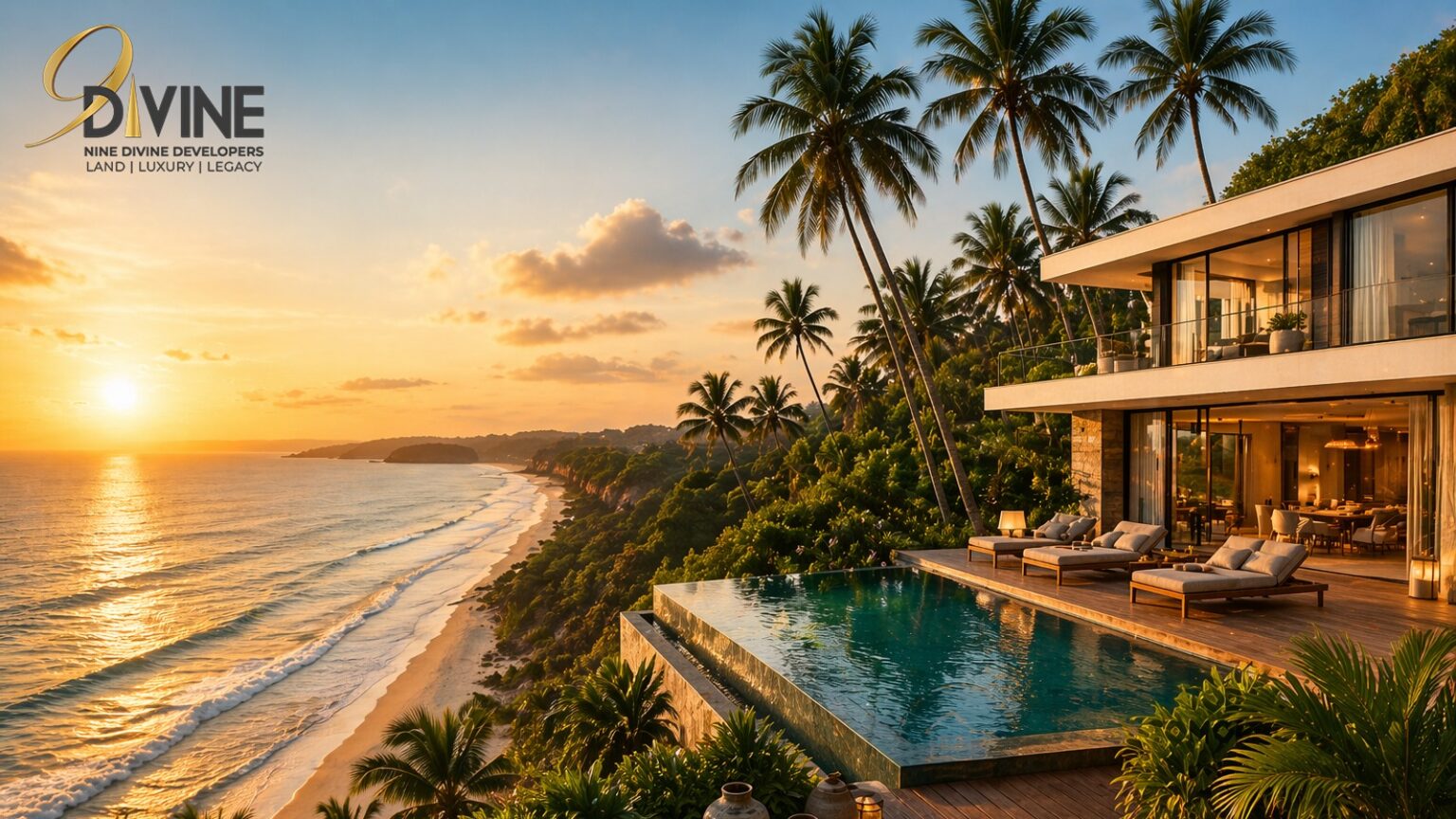
 The surge in maha goa tourism growth is redefining premium travel, with rising demand for luxury villas, private stays, and experience-driven destinations.
Maha Goa Tourism Growth in 2026: What Q1 Demand Reveals About the Future of Premium Travel and Investment
The story of Maha Goa tourism growth in 2026 is not defined by a sudden spike—but by sustained momentum on an already high base. In Q1 2026, Goa recorded approximately 28.5 lakh visitors, maintaining near-record performance despite global travel fluctuations and geopolitical uncertainties. This is a critical signal. When a mature destination continues to perform strongly at scale, it reflects not just popularity—but structural demand strength.
Table of Contents
- Maha Goa Tourism Growth in 2026: What Q1 Demand Reveals About the Future of Premium Travel and Investment
- Why Q1 2026 Matters in Understanding Maha Goa Tourism Growth
- The Q1 2026 Tourism Numbers That Define the Current Market
- How Tourism in Goa Is Evolving Beyond Traditional Seasonal Travel
- Booking Patterns in 2026: What the Travel Market Is Signalling
- Why the Upcoming Peak Season Could Be Even More Important
- The Shift From Hotels to Luxury Villas and Airbnb-Style Stays
- Why Villas and Managed Holiday Homes Are Gaining Attention
- MICE, Weddings, and Event Tourism Are Strengthening Premium Demand
- What Maha Goa Tourism Growth May Mean for Long-Term Investment Sentiment
- Key Takeaways From Q1 2026 for Investors and Premium Buyers
- FAQs
- Maha Goa Tourism Growth in 2026
- Subtle Strategic Perspective
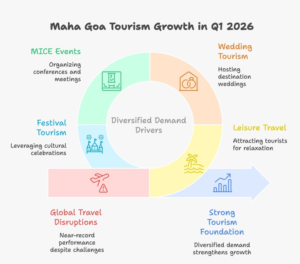
According to industry reports, this growth has been supported by MICE tourism, destination weddings, festivals, and strong domestic connectivity, indicating that Goa is no longer dependent on seasonal leisure travel alone.
For investors, NRIs, and high-value stakeholders, the key insight lies deeper. The current maha goa tourism growth trend is not just about footfall—it is about who is traveling, how they are traveling, and where they are choosing to stay. This shift is quietly redefining the long-term value narrative of premium coastal destinations.
Why Q1 2026 Matters in Understanding Maha Goa Tourism Growth
The first quarter of any year is often a strong indicator of the broader annual trajectory in tourism markets. In the case of maha goa tourism growth, Q1 2026 offers a particularly important signal.
Unlike peak-season surges driven by holidays alone, Q1 performance reflects sustained demand patterns, early-year booking confidence, and the ability of a destination to attract multiple traveler segments simultaneously. Goa’s ability to maintain near-record visitor levels in Q1 2026 highlights that demand is not cyclical—it is evolving.
A strong first quarter signals long-term tourism resilience
When a destination performs consistently at the beginning of the year, it indicates:
- Stable travel intent across domestic markets
- Strong advance booking cycles
- Confidence among high-value travelers
- Multi-segment demand (leisure + business + events)
This is exactly what the current maha goa tourism growth trend represents—a shift from seasonal demand to year-round tourism economics.
The Q1 2026 Tourism Numbers That Define the Current Market
Data remains the most objective lens to understand market direction. The 28.5 lakh tourist arrivals in Q1 2026 are not just a number—they represent continuity of demand at scale.
Near-record volumes show resilience, not just popularity
The significance lies in comparison. Goa had already recorded strong tourism numbers in 2025, making 2026 a high base year. Maintaining similar levels in Q1 2026 indicates:
- Strong repeat travel demand
- Increasing domestic traveler base
- Consistent brand value of the destination
This positions maha goa tourism growth as a resilient growth story, rather than a temporary spike.
Domestic connectivity and event-led travel are supporting demand
Tourism growth in Goa is now being supported by:
- Improved flight connectivity
- Rise in destination weddings
- Growth in MICE events
- Festival and experiential tourism
These segments typically attract higher-spending travelers, which strengthens overall destination economics and supports premium stay formats.
How Tourism in Goa Is Evolving Beyond Traditional Seasonal Travel
The modern traveler is no longer defined by fixed travel seasons. Instead, travel is becoming:
- Experience-driven
- Flexible
- Frequent
- Personalised
The current maha goa tourism growth narrative reflects this transformation.
Experience-led tourism is shaping premium demand
Goa is now being positioned as:
- A wedding destination
- A corporate retreat hub
- A wellness and slow-living destination
- A year-round leisure market
This shift aligns with global travel trends. According to Airbnb’s 2026 travel insights, travelers are increasingly choosing experience-based journeys over conventional tourism formats.
This evolution plays a critical role in shaping long-term demand patterns in Maha Goa.
Booking Patterns in 2026: What the Travel Market Is Signalling
Booking behavior often reveals future demand before peak season arrives. Current trends indicate that maha goa tourism growth is supported by strong underlying booking patterns.
Search trends signal sustained demand
Travel platforms have reported rising search interest and booking activity across:
- Hotels
- Villas
- Homestays
- Holiday homes
This diversification suggests that travelers are not only visiting, but exploring multiple stay formats.
Broad accommodation demand reflects a maturing market
A mature tourism destination is characterized by:
- Multiple accommodation choices
- Demand across price segments
- High repeat visitation
Goa is increasingly reflecting these characteristics, strengthening the case for long-term maha goa tourism growth.
Why the Upcoming Peak Season Could Be Even More Important
While Q1 sets the tone, the real test lies in how demand scales during peak travel months.
National hospitality trends support growth
According to ICRA, India’s hospitality industry is expected to grow by 9–12% in FY2026, driven by:
- Domestic leisure travel
- Weddings and social events
- Corporate travel
- MICE demand
Premium hotel occupancy is projected to remain strong, with rising average room rates.
Rising room rates are shifting traveler choices
As hotel prices increase, high-value travelers are:
- Seeking more space
- Exploring alternative stays
- Prioritizing comfort and exclusivity
This dynamic is directly influencing the maha goa tourism growth trajectory, especially in premium segments.
Peak-season demand may expand beyond hotels
The upcoming season is expected to see:
- Spillover demand into villas and private stays
- Increased group bookings
- Longer average stays
This indicates that tourism growth is not just scaling—it is evolving in structure.
The Shift From Hotels to Luxury Villas and Airbnb-Style Stays
One of the most defining aspects of maha goa tourism growth in 2026 is the shift in accommodation preference.
Privacy and personalization are becoming essential
Modern travelers increasingly value:
- Private spaces
- Custom experiences
- Flexible itineraries
Luxury villas and Airbnb-style stays naturally align with these preferences.
Group travel is reshaping stay economics
According to Airbnb insights, a large share of travel demand comes from:
- Families
- Friend groups
- Dual travelers
For such groups, villas offer:
- Better value compared to multiple hotel rooms
- Shared living spaces
- Private amenities
Space and flexibility are redefining luxury
Luxury is no longer defined only by service—it is defined by:
- Space
- Privacy
- Exclusivity
- Lifestyle
This is why villas and managed homes are gaining preference over traditional hotels in premium travel segments.
Alternative accommodation is becoming mainstream
The growing presence of:
- Managed vacation rentals
- Branded villa operators
- Platform-based short stays
indicates that this is not a niche shift—it is a structural transformation in travel behavior.
Why Villas and Managed Holiday Homes Are Gaining Attention
The rise of villa-style stays is closely linked to broader tourism dynamics.
Space is becoming a premium asset
In high-density urban living, travelers increasingly seek:
- Open environments
- Green surroundings
- Independent living spaces
This demand directly supports villa-style accommodations.
Stay flexibility influences long-term decisions
Travelers today often look for:
- Repeat visits
- Extended stays
- Familiar environments
This behavior gradually creates interest in:
- Second homes
- Managed properties
- Long-term lifestyle investments
These patterns subtly reinforce the strength of maha goa tourism growth.
MICE, Weddings, and Event Tourism Are Strengthening Premium Demand
Tourism demand is no longer limited to leisure.
Event-driven travel is expanding rapidly
Goa has become a preferred destination for:
- Destination weddings
- Corporate offsites
- Conferences and exhibitions
High-value segments drive premium stays
These segments typically:
- Travel in groups
- Spend more per trip
- Prefer premium accommodations
This strengthens the ecosystem for villas and luxury stays.
What Maha Goa Tourism Growth May Mean for Long-Term Investment Sentiment
The relationship between tourism and real estate is complex, but certain patterns are clear.
Tourism visibility strengthens destination value
When a region attracts:
- High visitor volumes
- Premium travelers
- Diverse travel segments
it enhances its long-term relevance.
Experience-driven demand supports premium assets
Travelers’ choice:
- Private stays
- Luxury villas
- Long-duration visits
create demand patterns that align with premium real estate formats.
Opportunity lies in alignment with trends
The key insight is not just growth—but alignment:
- Tourism demand
- Traveler preferences
- Accommodation formats
When these align, they create a strong foundation for sustained interest.
Key Takeaways From Q1 2026 for Investors and Premium Buyers
- Maha Goa tourism growth is driven by resilience, not short-term spikes
- Demand is diversified across leisure, events, and corporate travel
- Luxury villa and private stay formats are gaining strong preference
- Peak-season demand is expected to expand across multiple accommodation types
- Premium coastal destinations are attracting sustained attention
FAQs
1. What is driving maha goa tourism growth in 2026?
The maha goa tourism growth in 2026 is primarily driven by strong domestic travel demand, destination weddings, MICE (Meetings, Incentives, Conferences, and Exhibitions), and improved connectivity. Goa recorded approximately 28.5 lakh tourists in Q1 2026, maintaining near-record performance. This indicates that tourism demand is becoming more stable and diversified rather than seasonal.
2. Why is Q1 2026 considered important for maha goa tourism growth analysis?
Q1 2026 is significant because it reflects early-year travel behavior, booking confidence, and demand stability. Strong performance during this period suggests sustained tourism momentum for the rest of the year. In the case of maha goa tourism growth, maintaining near-record visitor levels indicates a strong foundation for upcoming peak seasons.
3. How is traveler behavior changing in maha goa tourism growth trends?
Traveler behavior is shifting toward:
- Experience-based travel
- Personalized stays
- Group and family travel
- Longer and more flexible trips
According to Airbnb insights, travelers are increasingly seeking unique and customized travel experiences, which is influencing the overall maha goa tourism growth trend.
4. Why are luxury villas becoming popular in maha goa tourism growth?
Luxury villas are gaining popularity due to:
- Privacy and exclusivity
- Better space for families and groups
- Cost efficiency for group travel
- Personalized experience
These factors align with modern travel preferences, making villas a key part of the evolving maha goa tourism growth landscape.
5. How do Airbnb-style accommodations impact maha goa tourism growth?
Airbnb-style accommodations contribute significantly to maha goa tourism growth by offering flexible, personalized, and premium stay options. They cater to group travel and long stays, which are increasingly preferred by modern travelers.
According to Airbnb, group and family travel continues to dominate booking trends.
6. What role does MICE tourism play in maha goa tourism growth?
MICE tourism plays a crucial role by bringing:
- Corporate events
- International conferences
- Business travelers
These segments typically have higher spending capacity and demand premium accommodations, strengthening the overall maha goa tourism growth ecosystem.
7. How is the upcoming peak season expected to impact maha goa tourism growth?
The upcoming peak season is expected to further accelerate maha goa tourism growth due to:
- Increased travel demand
- Higher hotel occupancy
- Rising room rates
- Spillover demand into villas and private stays
According to ICRA, India’s hospitality sector is expected to grow by 9–12% in FY2026, supporting premium destinations like Goa.
8. Is maha goa tourism growth driven only by leisure travel?
No, maha goa tourism growth is now driven by multiple segments, including:
- Leisure travel
- Destination weddings
- Corporate events
- Festivals and cultural tourism
This diversification makes tourism demand more stable and sustainable over time.
9. How does maha goa tourism growth influence long-term investment potential?
Sustained maha goa tourism growth enhances:
- Destination visibility
- Demand for premium stays
- Interest in second homes and villas
- Overall economic activity
While tourism alone does not define real estate value, consistent high-quality tourism demand strengthens long-term investment sentiment.
10. What makes maha goa tourism growth relevant for HNIs and NRIs?
For HNIs and NRIs, maha goa tourism growth is relevant because it reflects:
- Rising premium travel demand
- Growth in luxury accommodation preferences
- Increasing global visibility of the destination
- Long-term lifestyle and asset alignment
These factors are important when evaluating destinations for strategic and lifestyle-oriented investments.
Maha Goa Tourism Growth in 2026
The data from Q1 2026 reinforces one clear message: tourism growth is evolving in both scale and structure. It is no longer just about how many people are traveling—but about how they are choosing to experience destinations.
The rise of private stays, group travel, and experience-led tourism indicates that destinations like Maha Goa are moving toward a more premium, lifestyle-oriented travel ecosystem. This evolution is gradual but deeply structural, shaping long-term perceptions and preferences.
Subtle Strategic Perspective
As maha goa tourism growth continues to strengthen, developments that align with evolving traveler preferences naturally become more relevant. In this context, thoughtfully planned offerings such as Cida de Luxora’s luxurious villa plots in Maha Goa reflect how the market is adapting to changing expectations around space, privacy, and premium living.
For HNIs, NRIs, and long-term investors, the real insight lies not in short-term trends, but in identifying destinations where tourism momentum, lifestyle demand, and premium experiences are converging. The ongoing maha goa tourism growth story reflects such convergence—where evolving travel behavior is gradually shaping a new paradigm of coastal living and opportunity, with projects like Cida de Luxora’s luxurious villa plots in Maha Goa quietly aligning with this broader shift.



[…] Goa infrastructure projects 2026, these tourism numbers provide important context. Infrastructure development becomes particularly […]