
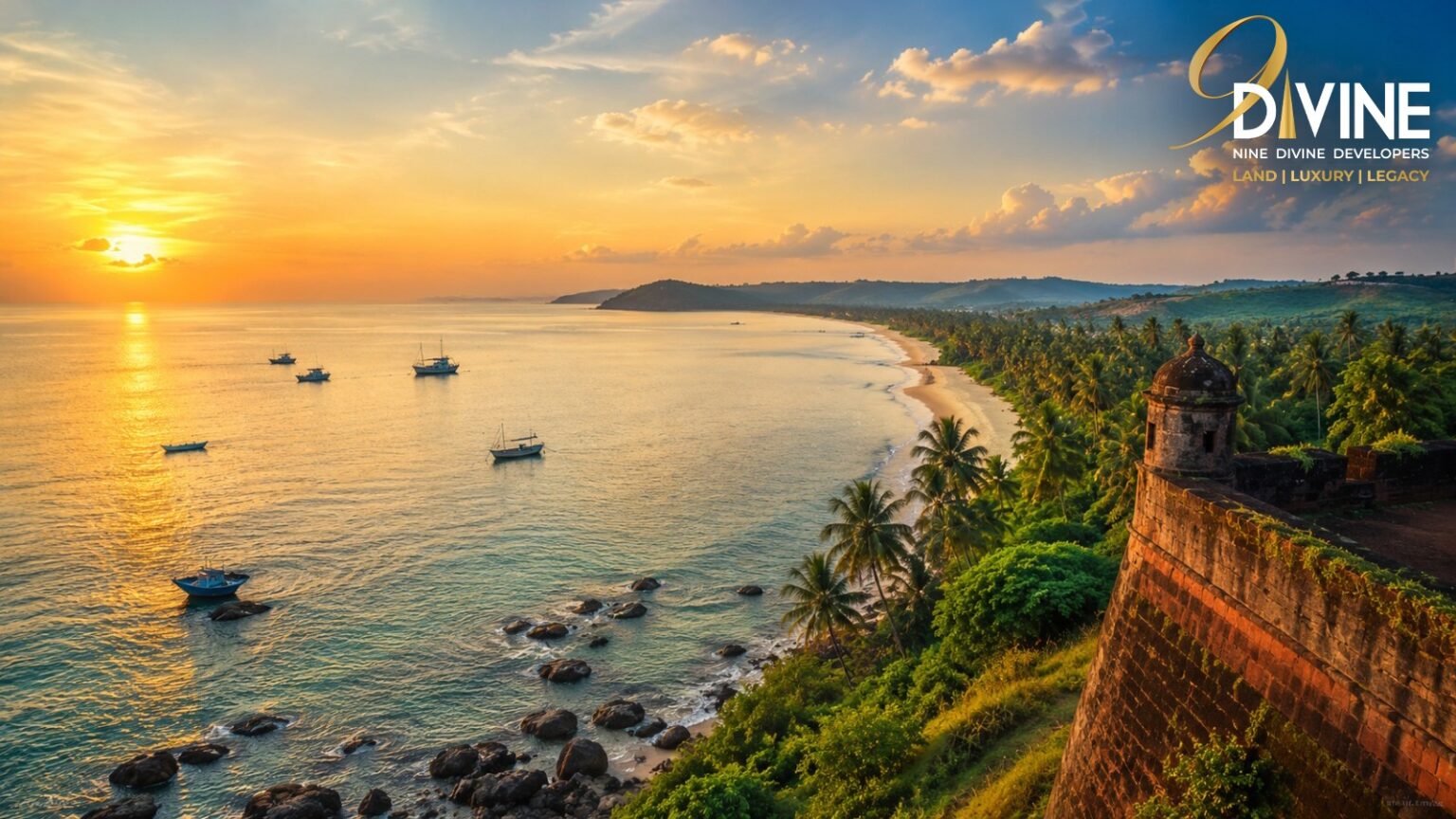
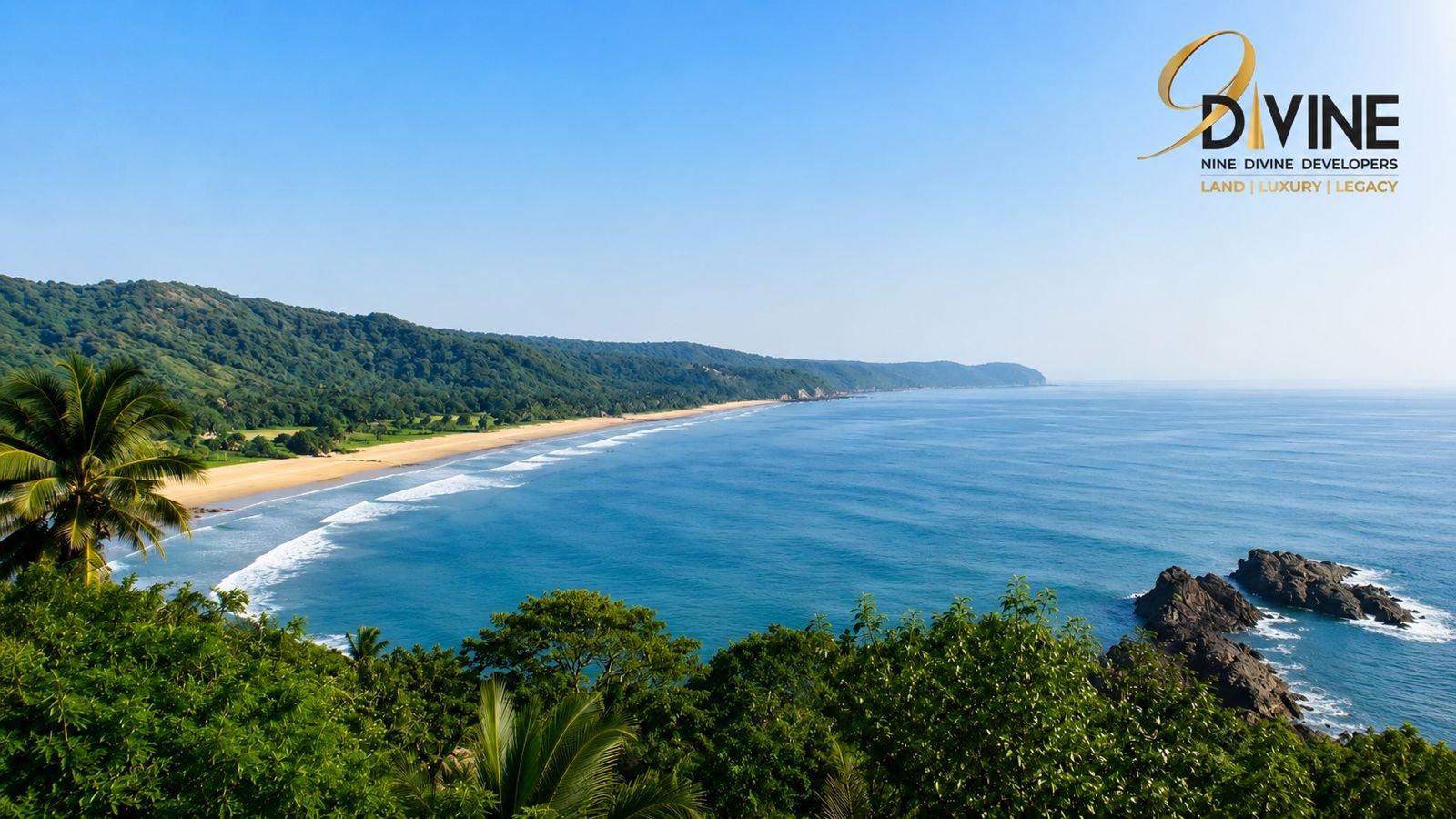
 A breathtaking view of Goa's coastline, where centuries-old maritime heritage, tropical landscapes, and the Arabian Sea come together to create one of India's most celebrated coastal destinations.
From Naval Legacy to Blue Economy Catalyst: How Marine Tourism in Sindhudurg Is Reshaping India’s Coastal Future
Across the world, coastal regions are increasingly becoming engines of economic growth, tourism development, and sustainable infrastructure investment. Governments are investing heavily in marine tourism, underwater attractions, artificial reefs, cruise infrastructure, and Blue Economy initiatives to unlock the economic potential of their coastlines. From Florida’s famous underwater ship reefs to Australia’s marine tourism destinations, successful coastal economies have demonstrated how tourism-led infrastructure can transform regional development.
Table of Contents
- From Naval Legacy to Blue Economy Catalyst: How Marine Tourism in Sindhudurg Is Reshaping India’s Coastal Future
- Understanding INS Guldar: The Naval Vessel Behind India’s First Underwater Warship Museum
- The Global Rise of Marine Tourism and the Blue Economy
- Why Sindhudurg Is Emerging as Maharashtra’s Marine Tourism Capital
- INS Guldar as an Economic Multiplier
- Artificial Reefs, Marine Biodiversity, and Environmental Benefits
- How Marine Tourism Supports Regional Infrastructure Development
- Global Success Stories and Lessons for Sindhudurg
- USS Oriskany, Florida
- HMAS Brisbane, Australia
- Malta’s Underwater Heritage Tourism
- Key Takeaways
- Tourism-Led Investment Trends and the Experience Economy
- The Strategic Role of the Blue Economy
- The Future Outlook for Marine Tourism in Sindhudurg
- Enhanced Connectivity
- Growing Domestic Tourism
- Underwater Tourism Expansion
- Marine Education and Research
- Destination Diversification
- FAQs
India is now entering a similar phase. Along Maharashtra’s Konkan coastline, a unique project is drawing national attention: the transformation of INS Guldar, a decommissioned Indian Navy vessel, into India’s first underwater warship museum and artificial reef. While the project has attracted interest from tourism enthusiasts and diving communities, its significance extends far beyond a single attraction.
The INS Guldar initiative represents a larger story about the future of marine tourism in Sindhudurg, the growth of India’s Blue Economy, and the emergence of Sindhudurg as a strategic coastal destination. Combined with improved connectivity, government-backed tourism projects, expanding hospitality infrastructure, and growing investor interest, the district is positioning itself as one of India’s most promising marine tourism regions.
For policymakers, investors, HNIs, NRIs, tourism operators, and infrastructure stakeholders, understanding the broader implications of marine tourism in Sindhudurg is becoming increasingly important. This transformation is not merely about tourism development; it reflects a wider economic evolution that could shape the future of the Konkan region for decades.
Understanding INS Guldar: The Naval Vessel Behind India’s First Underwater Warship Museum
INS Guldar served the Indian Navy for nearly four decades as a Kumbhir-class Landing Ship Tank (Medium). Commissioned in 1985 and built at the Gdynia Shipyard in Poland, the vessel played an important role in amphibious operations, troop transportation, and logistical support missions.
According to information released by the Indian Navy, INS Guldar spent thousands of days at sea and completed hundreds of operational deployments during its service life. Following its decommissioning in January 2024, the vessel entered a new chapter that few military ships ever experience.
Rather than being dismantled for scrap, INS Guldar was transferred to the Maharashtra Tourism Development Corporation (MTDC) as part of an innovative marine tourism initiative. The objective was to transform the vessel into an underwater attraction while simultaneously creating an artificial reef that could support marine biodiversity.
The concept follows a globally proven model known as “Ships to Reefs,” where retired vessels are environmentally prepared and intentionally submerged to create underwater ecosystems and tourism attractions. Similar projects have generated significant tourism activity in destinations such as Florida, Malta, Australia, and Thailand.
For India, INS Guldar marks an important milestone in the evolution of marine tourism in Sindhudurg and demonstrates how maritime heritage can be repurposed to create long-term economic and environmental value.
The Global Rise of Marine Tourism and the Blue Economy
Marine tourism has become one of the fastest-growing segments of the global travel industry. According to the United Nations, ocean-based industries contribute trillions of dollars to the global economy annually and support millions of jobs worldwide.
Marine tourism includes activities such as:
- Scuba diving
- Snorkeling
- Underwater museums
- Coastal cruises
- Marine wildlife experiences
- Adventure water sports
- Recreational boating
These experiences typically generate higher visitor spending than conventional tourism because they involve specialized equipment, guided experiences, training, transportation, and longer visitor stays.
India’s Blue Economy framework recognizes the strategic importance of marine resources, sustainable tourism, coastal livelihoods, and ocean-based industries.
Within this context, marine tourism in Sindhudurg aligns closely with national development priorities. By integrating tourism, conservation, infrastructure development, and economic growth, the region is contributing to a broader vision for India’s coastal future.
Why Sindhudurg Is Emerging as Maharashtra’s Marine Tourism Capital
The success of marine tourism destinations depends on a combination of natural assets, infrastructure, accessibility, and government support. Sindhudurg possesses a unique combination of these factors.
Located along the southern Konkan coastline, the district is known for its relatively clean waters, rich marine biodiversity, scenic beaches, and historic maritime heritage.
Key coastal destinations include:
- Tarkarli
- Devbagh
- Vengurla
- Nivati
- Bhogwe
- Shiroda
These locations have already established a reputation for scuba diving, snorkeling, dolphin safaris, and water sports.
Marine tourism in Sindhudurg benefits from an environment that remains comparatively less urbanized than many established coastal destinations. This allows for a tourism model that emphasizes nature, marine experiences, and sustainable development.
Another significant factor is improved accessibility.
The development of Sindhudurg Airport at Chipi has substantially enhanced regional connectivity. Combined with the Konkan Railway network and improving road infrastructure, accessibility is no longer a major barrier to tourism growth.
As a result, marine tourism in Sindhudurg is increasingly being viewed as a long-term economic driver rather than a niche tourism segment.
INS Guldar as an Economic Multiplier
One of the most important aspects of the INS Guldar project is its potential to create economic ripple effects throughout the region.
Tourism attractions rarely generate value in isolation. Instead, they stimulate demand across multiple sectors simultaneously.
The economic value chain includes:
- Hotels
- Resorts
- Homestays
- Restaurants
- Transportation
- Local retail
- Adventure tourism services
- Marine tourism operators
Marine tourism in Sindhudurg has the potential to create new employment opportunities across both direct and indirect sectors.
Direct opportunities may include:
- Dive instructors
- Dive guides
- Boat operators
- Marine technicians
- Safety personnel
Indirect opportunities may emerge through:
- Hospitality services
- Travel agencies
- Transportation providers
- Food and beverage businesses
- Tourism support services
International tourism studies consistently indicate that adventure and marine tourists often spend significantly more than average leisure travelers. This higher spending profile can contribute positively to local economic activity.
The introduction of INS Guldar strengthens the region’s ability to attract such visitors while expanding the diversity of experiences available within marine tourism in Sindhudurg.
Artificial Reefs, Marine Biodiversity, and Environmental Benefits
A unique feature of the INS Guldar project is its environmental dimension.
Before submersion, vessels intended for artificial reef creation undergo extensive preparation. Hazardous materials are removed, and environmental standards are followed to ensure the structure can safely integrate into the marine ecosystem.
Once submerged, artificial reefs can provide:
- Habitat for marine species
- Shelter for fish populations
- Surfaces for coral growth
- Enhanced biodiversity
Globally, artificial reefs have demonstrated measurable ecological benefits when managed responsibly.
Examples include:
- USS Oriskany, Florida
- HMAS Brisbane, Australia
- Malta’s underwater reef systems
Marine tourism in Sindhudurg therefore offers a unique opportunity to combine tourism development with environmental enhancement.
This integration reflects modern sustainability principles, where conservation and economic development are viewed as complementary objectives rather than competing priorities.
How Marine Tourism Supports Regional Infrastructure Development
Infrastructure investment and tourism growth often reinforce one another.
As visitor numbers increase, demand rises for:
- Transportation
- Accommodation
- Public facilities
- Digital infrastructure
- Healthcare access
- Tourism services
Marine tourism in Sindhudurg is already encouraging broader infrastructure improvements that benefit both visitors and local communities.
Examples include:
- Airport connectivity
- Road upgrades
- Tourism facilities
- Hospitality investments
- Recreational infrastructure
This pattern has been observed across successful tourism destinations worldwide.
Destinations such as Bali, Phuket, and Da Nang experienced significant infrastructure expansion following sustained tourism growth. Improved accessibility subsequently attracted additional investment, creating a cycle of economic development.
For policymakers and planners, marine tourism can therefore function as a catalyst for wider regional transformation.
Global Success Stories and Lessons for Sindhudurg
Several international destinations demonstrate the long-term potential of underwater tourism attractions.
USS Oriskany, Florida
Known as the “Great Carrier Reef,” the USS Oriskany became one of the world’s largest artificial reef projects and a major diving attraction.
HMAS Brisbane, Australia
Australia transformed a retired naval vessel into an underwater tourism asset that supports both marine biodiversity and diving tourism.
Malta’s Underwater Heritage Tourism
Malta has successfully integrated underwater attractions into its broader tourism strategy, attracting international diving enthusiasts.
Key Takeaways
Successful marine tourism destinations typically share:
- Strong environmental management
- High safety standards
- Effective destination branding
- Long-term infrastructure planning
- Sustainable tourism practices
Marine tourism in Sindhudurg has the opportunity to benefit from these global lessons while developing a uniquely Indian model.
Tourism-Led Investment Trends and the Experience Economy
Across global markets, tourism infrastructure often serves as a precursor to broader economic activity.
Economic development patterns frequently follow a sequence:
Infrastructure Development → Tourism Growth → Hospitality Expansion → Business Activity → Regional Economic Growth
As tourism destinations mature, opportunities emerge across multiple sectors.
Examples include:
- Hospitality
- Wellness tourism
- Recreation
- Food services
- Adventure tourism
- Marine experiences
Marine tourism in Sindhudurg is increasingly being discussed within this broader framework.
Investors and business leaders are monitoring trends such as:
- Rising demand for experiential travel
- Growth of domestic tourism
- Remote work flexibility
- Wellness-focused travel
- Nature-based tourism experiences
These trends support the long-term growth potential of coastal tourism destinations across India.
The Strategic Role of the Blue Economy
The Blue Economy concept has become a central pillar of coastal development policy worldwide.
According to NITI Aayog, the Blue Economy seeks to promote sustainable use of ocean resources while supporting economic growth, environmental protection, and livelihood generation.
Marine tourism in Sindhudurg contributes directly to several Blue Economy objectives:
- Coastal employment generation
- Sustainable tourism development
- Marine conservation
- Infrastructure enhancement
- Community participation
As governments continue prioritizing coastal development initiatives, projects that align economic and environmental goals are likely to play an increasingly important role.
INS Guldar represents a practical example of how maritime heritage can contribute to broader Blue Economy objectives.
The Future Outlook for Marine Tourism in Sindhudurg
Looking ahead, the future of marine tourism in Sindhudurg appears increasingly promising.
Several factors support long-term growth potential:
Enhanced Connectivity
Improved air, rail, and road connectivity continues to reduce travel barriers.
Growing Domestic Tourism
India’s domestic tourism market continues to expand, creating demand for new experiential destinations.
Underwater Tourism Expansion
Projects such as the INS Guldar underwater museum have the potential to attract diving enthusiasts from across India and international markets.
Marine Education and Research
Artificial reefs can also support marine research, environmental education, and conservation initiatives.
Destination Diversification
The district’s combination of beaches, forts, marine activities, biodiversity, and coastal culture creates opportunities for diversified tourism experiences.
Collectively, these factors strengthen the long-term outlook for marine tourism in Sindhudurg and position the region as an emerging contributor to India’s coastal economy.
FAQs
1. What is INS Guldar, and why is it important for Marine Tourism in Sindhudurg?
INS Guldar was a Kumbhir-class Landing Ship Tank (LST) that served the Indian Navy for nearly four decades before being decommissioned in 2024. Instead of being scrapped, the vessel was repurposed into India’s first underwater warship museum and artificial reef project off the Sindhudurg coast.
The significance of INS Guldar goes beyond maritime heritage. It serves as a landmark project that strengthens Marine Tourism in Sindhudurg, attracts adventure travelers, supports scuba diving tourism, and contributes to the region’s growing Blue Economy ecosystem. Similar underwater attractions in countries such as the United States and Australia have successfully boosted tourism while supporting marine biodiversity.
2. How does Marine Tourism in Sindhudurg contribute to the local economy?
Marine Tourism in Sindhudurg creates economic opportunities across multiple sectors, including hospitality, transportation, water sports, local retail, restaurants, tour operations, and marine recreation services.
Tourists participating in scuba diving, snorkeling, boating, and underwater exploration generally spend more per trip than conventional beach tourists. This spending supports local businesses, generates employment, and contributes to regional economic growth.
The introduction of attractions such as INS Guldar is expected to further diversify the tourism economy by encouraging year-round visitation and attracting new visitor segments.
3. Why is Sindhudurg considered an emerging hub for Marine Tourism in India?
Sindhudurg possesses several natural and strategic advantages that support marine tourism development. These include clear coastal waters, rich marine biodiversity, historic maritime attractions, scenic beaches, and expanding tourism infrastructure.
Popular destinations such as Tarkarli, Devbagh, Vengurla, and Nivati have already established themselves as adventure tourism hotspots. Improved connectivity through Chipi Airport, the Konkan Railway, and upgraded highways is further strengthening the district’s tourism potential.
Together, these factors position Marine Tourism in Sindhudurg as one of Maharashtra’s most promising coastal development opportunities.
4. What is an artificial reef, and how does it benefit Marine Tourism in Sindhudurg?
An artificial reef is a human-made underwater structure designed to support marine life and create new aquatic habitats. In the case of INS Guldar, the vessel was environmentally prepared before being submerged so that it could function as both a tourism attraction and a marine ecosystem.
Over time, artificial reefs attract fish populations, corals, and other marine organisms. This process enhances underwater biodiversity while creating unique diving experiences for visitors.
Artificial reefs are widely used worldwide to support both conservation and tourism objectives, making them an important component of Marine Tourism in Sindhudurg.
5. How does INS Guldar support India’s Blue Economy initiatives?
India’s Blue Economy framework focuses on the sustainable use of ocean resources to generate economic growth, improve livelihoods, and preserve marine ecosystems.
INS Guldar contributes to this vision by combining marine conservation, tourism development, coastal employment generation, and environmental enhancement. The project demonstrates how decommissioned maritime assets can be repurposed to create long-term social, environmental, and economic value.
As Marine Tourism in Sindhudurg grows, it supports broader national goals related to coastal development and sustainable ocean-based industries.
6. How does Marine Tourism in Sindhudurg compare with established coastal destinations like Goa?
While Goa remains one of India’s most recognized beach destinations, Sindhudurg offers a different tourism proposition centered around marine experiences, underwater exploration, biodiversity, and relatively less crowded coastal environments.
Marine Tourism in Sindhudurg focuses heavily on scuba diving, snorkeling, artificial reefs, coastal heritage, and nature-based tourism. With projects such as INS Guldar and ongoing tourism infrastructure development, Sindhudurg is increasingly attracting travelers seeking immersive coastal experiences.
Rather than competing directly, the district is creating a complementary tourism identity within India’s broader coastal tourism landscape.
7. What global projects are similar to INS Guldar’s underwater museum initiative?
Several countries have successfully transformed retired ships into underwater attractions that support both tourism and marine conservation.
Notable examples include:
- USS Oriskany (Florida, USA)
- HMAS Brisbane (Australia)
- P29 Patrol Boat (Malta)
- Artificial Reef Programs in Thailand
These projects have become major diving destinations and have generated significant tourism revenue while promoting marine biodiversity.
INS Guldar places Marine Tourism in Sindhudurg within this globally recognized model of sustainable coastal tourism development.
8. What infrastructure developments are supporting Marine Tourism in Sindhudurg?
Tourism growth is often linked to improvements in accessibility and public infrastructure. Several developments are enhancing the region’s attractiveness:
- Sindhudurg Airport (Chipi)
- Konkan Railway connectivity
- National highway improvements
- Tourism facilities and amenities
- Water sports infrastructure
- Hospitality sector expansion
These investments are helping create a stronger foundation for Marine Tourism in Sindhudurg while supporting broader regional development goals.
9. What opportunities does Marine Tourism in Sindhudurg create for entrepreneurs and businesses?
The growth of marine tourism creates opportunities across multiple sectors, including:
- Dive training centers
- Marine recreation services
- Boat tourism
- Hospitality and accommodation
- Wellness tourism
- Eco-tourism experiences
- Local food and cultural tourism
As visitor numbers increase, businesses that support experiential travel and coastal tourism are likely to play an increasingly important role in the regional economy.
Marine Tourism in Sindhudurg is therefore not only a tourism trend but also a broader economic opportunity for entrepreneurs and stakeholders.
10. What is the future outlook for Marine Tourism in Sindhudurg?
The future of Marine Tourism in Sindhudurg appears promising due to a combination of natural assets, infrastructure investments, government initiatives, and growing traveler interest in experiential tourism.
Key growth drivers include:
- INS Guldar underwater museum
- Expansion of scuba diving tourism
- Blue Economy initiatives
- Improved regional connectivity
- Marine conservation projects
- Coastal tourism diversification
As India continues investing in maritime and coastal development, Sindhudurg is increasingly being recognized as a destination capable of supporting sustainable tourism, environmental stewardship, and long-term economic growth.
The story of INS Guldar is ultimately about transformation. A vessel that once served strategic naval purposes is now beginning a new journey as a catalyst for tourism, environmental stewardship, and regional development.
Its significance extends beyond maritime history. It reflects how coastal destinations can leverage existing assets to create new economic opportunities while supporting conservation and sustainable growth.
Marine tourism in Sindhudurg is becoming an important component of the district’s development narrative. Supported by improving infrastructure, growing visitor interest, Blue Economy initiatives, and innovative projects such as the INS Guldar underwater museum, the region is gradually establishing itself as a noteworthy coastal destination.
For policymakers, investors, entrepreneurs, tourism stakeholders, and researchers, Sindhudurg offers a compelling case study of how tourism, infrastructure, conservation, and economic development can work together to shape the future of a coastal region.
As India continues expanding its maritime ambitions, the evolution of marine tourism in Sindhudurg may well become one of the country’s most significant coastal development stories of the coming decade.


No Comments