




 Where travel goes beyond places — and becomes an experience. Discover how Vengurla embodies the future of Experience-Led Tourism.
The Future of Tourism Is Experience-Led: Why Vengurla Fits the Trend
Tourism is undergoing one of the most significant transformations in its history. For decades, travelers chose destinations based on iconic landmarks, famous beaches, luxury hotels, or bucket-list attractions. Today, however, the future of tourism is increasingly being shaped by something far more personal: experiences.
Table of Contents
- The Future of Tourism Is Experience-Led: Why Vengurla Fits the Trend
- Understanding the Rise of Experience-Led Tourism
- The Tourism Trends Defining the Future
- Wellness Tourism Is Becoming Mainstream
- Slow Travel Is Reshaping Tourist Behavior
- Sustainability Has Become a Travel Priority
- Cultural Immersion Is Driving Travel Choices
- Why Emerging Coastal Destinations Are Benefiting
- Lower Density
- Stronger Connection to Nature
- Authentic Local Character
- Lifestyle Appeal
- Vengurla Through the Lens of Experience-Led Tourism
- Authentic Coastal Character
- Rich Natural Assets
- Alignment With Wellness Tourism
- A Natural Slow Travel Destination
- Infrastructure and Accessibility: A Key Growth Driver
- Improving Regional Connectivity
- The Tourism Development Cycle
- The Economic Power of Experience-Led Tourism
- The Growing Importance of Experience Capital
- Natural Capital
- Cultural Capital
- Lifestyle Capital
- Social Capital
- What Experience-Led Tourism Means for Long-Term Destination Growth
- Longer Visitor Engagement
- Higher Spending Patterns
- Sustainable Growth Potential
- Community Participation
- Looking Ahead: Why Vengurla Fits the Future of Tourism
- FAQs
Modern travelers are no longer asking, “Where should I go?” Instead, they are asking, “What kind of experience do I want to have?” This shift is redefining how destinations compete, how tourism economies evolve, and how investors evaluate long-term opportunities in emerging regions.
According to the UN Tourism (UNWTO), international tourism has surpassed pre-pandemic recovery levels, with travelers increasingly prioritizing authenticity, wellness, sustainability, cultural immersion, and meaningful engagement over traditional sightseeing. Simultaneously, research from the World Travel & Tourism Council (WTTC) highlights the growing economic influence of experience-led tourism, where travelers actively seek destinations that offer emotional value rather than simply physical attractions.
This evolution presents a compelling opportunity for emerging destinations that possess authentic natural and cultural assets. Among India’s coastal regions, Vengurla stands out as a destination that aligns remarkably well with the forces shaping the future of tourism.
Situated along Maharashtra’s Konkan coastline, Vengurla represents a unique convergence of natural beauty, cultural authenticity, improving connectivity, and lifestyle appeal. While many destinations are attempting to create experiences through infrastructure and entertainment, Vengurla possesses something increasingly rare in modern tourism: genuine authenticity.
As experience-led tourism becomes a dominant global trend, understanding why destinations like Vengurla are gaining relevance offers valuable insights for travelers, policymakers, hospitality stakeholders, and long-term investors alike.
Understanding the Rise of Experience-Led Tourism
The concept of experience-led tourism is rooted in a broader economic transformation often referred to as the “experience economy.” Consumers across industries increasingly value experiences over possessions, and travel is perhaps the clearest example of this shift.
Traditionally, tourism revolved around visiting famous places, checking landmarks off a list, and following standardized itineraries. While these activities remain relevant, modern travelers increasingly seek deeper engagement with the places they visit.
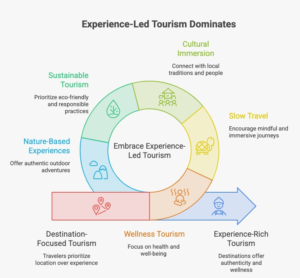
Experience-led tourism focuses on:
- Cultural immersion
- Local interactions
- Authentic cuisine
- Nature-based exploration
- Wellness experiences
- Community engagement
- Learning and personal growth
Research from the Mastercard Economics Institute indicates that travelers are increasingly allocating their spending toward experiences that create lasting memories rather than purely transactional tourism activities.
This trend is especially pronounced among affluent travelers, younger professionals, remote workers, and international visitors who seek destinations capable of delivering authenticity, exclusivity, and emotional connection.
The result is a tourism landscape where experience-led tourism has become a critical determinant of destination competitiveness.
The Tourism Trends Defining the Future
Several interconnected trends are driving the growth of experience-led tourism globally.
Wellness Tourism Is Becoming Mainstream
One of the fastest-growing segments within global tourism is wellness travel.
According to the Global Wellness Institute, wellness tourism continues to expand rapidly as travelers increasingly prioritize physical health, mental wellbeing, stress reduction, and holistic lifestyle experiences.
Today’s wellness travelers are seeking:
- Coastal retreats
- Yoga and meditation experiences
- Digital detox escapes
- Nature immersion
- Mindfulness programs
- Preventive wellness journeys
Unlike traditional leisure tourism, wellness tourism is deeply connected to lifestyle aspirations. Travelers increasingly view vacations as opportunities to restore energy, improve wellbeing, and reconnect with nature.
Slow Travel Is Reshaping Tourist Behavior
Another defining aspect of experience-led tourism is the rise of slow travel.
Rather than visiting multiple destinations within a short period, travelers increasingly choose longer stays that allow for deeper engagement with local communities and environments.
Slow travel encourages:
- Extended stays
- Local exploration
- Reduced environmental impact
- Authentic experiences
- Better quality of life during travel
This shift is creating opportunities for destinations that offer tranquility, authenticity, and immersive experiences rather than high-volume tourism infrastructure.
Sustainability Has Become a Travel Priority
Sustainability is no longer a niche concern.
Research from Agoda’s sustainability survey found that a significant majority of Indian travelers now consider environmental impact when making travel decisions.
Travelers increasingly evaluate destinations based on:
- Environmental stewardship
- Responsible tourism practices
- Community involvement
- Conservation efforts
- Ecological preservation
This growing awareness reinforces the importance of destinations that can balance tourism growth with environmental responsibility.
Cultural Immersion Is Driving Travel Choices
Experience-led tourism is also fueling interest in cultural immersion.
Travelers want to understand how local communities live, eat, celebrate, and interact with their environment.
Popular experiential activities now include:
- Culinary tourism
- Heritage walks
- Village experiences
- Local festivals
- Artisan interactions
- Community-led tourism
Destinations with strong cultural identities are therefore gaining renewed relevance in a marketplace increasingly driven by authenticity.
Why Emerging Coastal Destinations Are Benefiting
Historically, tourism growth concentrated around a relatively small number of well-known destinations. However, changing traveler preferences are creating opportunities for lesser-known regions that offer unique experiences.
Emerging coastal destinations benefit from several advantages:
Lower Density
Travelers increasingly value privacy and space.
Overcrowding, congestion, and commercialization have prompted many visitors to seek alternatives that offer a more relaxed environment.
Stronger Connection to Nature
Coastal ecosystems naturally support:
- Wellness experiences
- Outdoor recreation
- Biodiversity exploration
- Sustainable tourism initiatives
Authentic Local Character
Emerging destinations often retain stronger cultural identities than heavily commercialized tourism hubs.
This authenticity aligns perfectly with the principles of experience-led tourism.
Lifestyle Appeal
The rise of remote work and flexible lifestyles has increased demand for destinations that support longer stays and work-life integration.
Coastal destinations offering quality of life alongside natural beauty are increasingly attractive to modern travelers.
Vengurla Through the Lens of Experience-Led Tourism
When evaluated against emerging tourism trends, Vengurla demonstrates many characteristics that define successful experience-led tourism destinations.
Authentic Coastal Character
Located within Maharashtra’s Sindhudurg district, Vengurla offers a coastal experience rooted in the traditions of the Konkan region.
Unlike destinations built primarily around tourism infrastructure, Vengurla’s appeal stems from authentic local culture, traditional fishing communities, regional cuisine, and a deep connection to its natural surroundings.
For travelers seeking genuine experiences, authenticity has become a powerful differentiator.
Rich Natural Assets
According to Maharashtra Tourism, Vengurla is known for its scenic beaches, coastal landscapes, and peaceful atmosphere.
Its natural assets include:
- Coastal ecosystems
- Marine biodiversity
- Scenic viewpoints
- Cashew and mango plantations
- Forested surroundings
- Unspoiled shoreline stretches
These characteristics align closely with the growing demand for nature-based travel experiences.
Alignment With Wellness Tourism
As wellness tourism expands globally, destinations capable of supporting restorative experiences are becoming increasingly valuable.
Vengurla’s environment naturally supports:
- Oceanfront relaxation
- Mindfulness retreats
- Yoga programs
- Nature walks
- Digital detox experiences
- Wellness-oriented hospitality concepts
The destination’s relatively low-density environment further enhances its suitability for wellness-focused travel.
A Natural Slow Travel Destination
Vengurla’s pace of life aligns with the principles of slow travel.
Rather than encouraging rushed itineraries, the destination invites visitors to engage deeply with local culture, landscapes, and communities.
This creates opportunities for longer visitor stays, which often generate greater economic value for local economies while enhancing traveler satisfaction.
Infrastructure and Accessibility: A Key Growth Driver
One of the most important factors influencing tourism growth is accessibility.
Historically, many attractive destinations remained underdeveloped due to limited connectivity. As infrastructure improves, however, destination growth often accelerates significantly.
Improving Regional Connectivity
The development of Sindhudurg Airport has strengthened access to the Konkan region.
In addition, connectivity through Goa’s international aviation infrastructure provides additional accessibility for domestic and international travelers.
Improved road networks and transportation corridors further support regional mobility.
These developments contribute to a broader tourism ecosystem that enhances destination visibility and accessibility.
The Tourism Development Cycle
Across global tourism markets, a common pattern often emerges:
- Infrastructure investment
- Improved accessibility
- Visitor growth
- Hospitality expansion
- Destination development
- Lifestyle and real estate evolution
Understanding this progression is important for stakeholders evaluating the long-term potential of emerging tourism destinations.
The Economic Power of Experience-Led Tourism
Experience-led tourism generates value far beyond visitor spending.
The tourism sector creates ripple effects throughout local economies by supporting:
- Employment
- Entrepreneurship
- Hospitality businesses
- Transportation services
- Cultural enterprises
- Food and beverage sectors
According to the World Travel & Tourism Council (WTTC), tourism remains one of the world’s largest economic sectors, contributing significantly to GDP and job creation across multiple industries.
Destinations that successfully attract experience-driven travelers often benefit from higher-value tourism activity because visitors tend to:
- Stay longer
- Spend more locally
- Seek premium experiences
- Return for repeat visits
This creates opportunities for sustainable economic growth that extends beyond traditional tourism models.
The Growing Importance of Experience Capital
One of the most overlooked concepts in destination development is what can be described as “experience capital.”
Traditional development models often focus primarily on physical infrastructure.
However, experience-led tourism increasingly rewards destinations possessing:
Natural Capital
Coastlines, biodiversity, forests, landscapes, and environmental quality.
Cultural Capital
Local traditions, cuisine, heritage, storytelling, and community identity.
Lifestyle Capital
Wellness opportunities, quality of life, and slow-living environments.
Social Capital
Community engagement, authenticity, and meaningful visitor interactions.
Together, these assets form a destination’s experience capital.
As tourism continues evolving, destinations with strong experience capital may enjoy competitive advantages that cannot easily be replicated through construction or infrastructure investment alone.
Vengurla’s strengths are particularly relevant in this context because many of its most valuable assets already exist naturally.
What Experience-Led Tourism Means for Long-Term Destination Growth
The future of tourism is increasingly connected to quality rather than quantity.
Destinations that succeed in attracting visitors seeking wellness, sustainability, authenticity, and cultural engagement may be better positioned to generate long-term value than destinations focused solely on visitor volume.
Several factors support this view:
Longer Visitor Engagement
Experience-focused travelers often spend more time within destinations.
Higher Spending Patterns
Premium experiences frequently generate stronger local economic benefits.
Sustainable Growth Potential
Responsible tourism models can help balance economic development with environmental stewardship.
Community Participation
Authentic experiences often rely on local involvement, creating opportunities for inclusive growth.
These dynamics make experience-led tourism an important consideration for destination planners, hospitality operators, and investors evaluating emerging regions.
Looking Ahead: Why Vengurla Fits the Future of Tourism
The forces reshaping global tourism are unlikely to reverse.
Wellness travel continues expanding.
Sustainable tourism continues gaining momentum.
Slow travel is becoming increasingly popular.
Travelers are seeking authenticity, personalization, and deeper engagement.
At the same time, destinations capable of delivering these experiences remain relatively limited.
Vengurla’s combination of natural beauty, cultural richness, coastal ecosystems, wellness potential, and improved accessibility places it within several of the most important tourism trends shaping the coming decade.
Rather than relying on manufactured attractions, the destination benefits from authentic assets that increasingly resonate with modern traveler preferences.
This alignment between global demand trends and local destination characteristics helps explain why Vengurla is becoming increasingly relevant within conversations about the future of tourism.
Tourism is no longer defined solely by landmarks, luxury hotels, or sightseeing itineraries. The industry’s future is being shaped by experiences that create emotional connections, support wellbeing, encourage cultural discovery, and foster meaningful engagement with people and places.
Experience-led tourism has emerged as one of the defining trends of the modern travel economy, influencing traveler behavior, destination development strategies, and tourism investment priorities worldwide.
As travelers increasingly seek authenticity, sustainability, wellness, and slow-living experiences, destinations that possess strong natural and cultural foundations are gaining prominence.
Vengurla represents a compelling example of this evolution. Its coastal landscapes, Konkan heritage, wellness potential, environmental richness, and improving accessibility align closely with the forces transforming global tourism.
For policymakers, entrepreneurs, hospitality stakeholders, and long-term observers of destination development, Vengurla offers valuable insights into how experience-led tourism may shape the next chapter of India’s coastal tourism story.
FAQs
1. What is Experience-Led Tourism and why is it becoming the future of travel?
Experience-Led Tourism refers to travel that prioritizes meaningful, immersive, and authentic experiences over simply visiting popular attractions. Instead of focusing solely on sightseeing, travelers increasingly seek deeper connections with local culture, nature, cuisine, wellness, and community life.
According to the UN Tourism (UNWTO) and the World Travel & Tourism Council (WTTC), travelers are increasingly valuing memorable experiences, personal enrichment, and emotional engagement. This shift is driving demand for destinations that offer authenticity, sustainability, and cultural immersion.
As a result, Experience-Led Tourism is expected to play a defining role in shaping global tourism growth through 2030 and beyond.
2. Why are travelers increasingly choosing Experience-Led Tourism over traditional tourism?
Modern travelers are moving beyond checklist tourism and seeking experiences that create lasting memories. Factors driving this shift include:
- Growing interest in local culture and traditions
- Demand for authentic food experiences
- Desire for wellness and mindfulness travel
- Increasing preference for nature-based tourism
- Remote work and flexible travel lifestyles
- Interest in sustainable and responsible travel
Research from the Mastercard Economics Institute shows travelers are increasingly spending on experiences rather than material purchases, reinforcing the growth of Experience-Led Tourism globally.
3. How does wellness tourism fit into the Experience-Led Tourism trend?
Wellness tourism has become one of the fastest-growing segments within Experience-Led Tourism. Today’s travelers are seeking destinations that support physical, mental, and emotional wellbeing.
Popular wellness travel experiences include:
- Yoga retreats
- Meditation programs
- Digital detox vacations
- Nature immersion
- Coastal wellness stays
- Holistic healing experiences
According to the Global Wellness Institute, wellness tourism is projected to continue expanding significantly over the coming decade, making it one of the most important drivers of experience-led travel worldwide.
Destinations that combine natural beauty, tranquility, and healthy lifestyles are increasingly attracting wellness-focused travelers.
4. What makes coastal destinations ideal for Experience-Led Tourism?
Coastal destinations naturally align with many of the factors driving Experience-Led Tourism.
They offer:
- Scenic natural environments
- Wellness-oriented lifestyles
- Water-based recreation
- Slow travel experiences
- Biodiversity and eco-tourism opportunities
- Authentic local cultures and cuisines
Unlike heavily urbanized tourism centers, coastal regions often provide a stronger sense of connection with nature, making them attractive to travelers seeking meaningful and restorative experiences.
This is one reason why many emerging coastal destinations are becoming increasingly relevant within the future tourism landscape.
5. Why is Vengurla often discussed within emerging Experience-Led Tourism destinations?
Vengurla possesses several characteristics that align closely with the future of Experience-Led Tourism.
These include:
- Relatively unspoiled coastal landscapes
- Authentic Konkani culture
- Traditional fishing communities
- Rich biodiversity
- Wellness tourism potential
- Slow travel appeal
- Access to nature-based experiences
According to Maharashtra Tourism, the region is known for its beaches, scenic beauty, and peaceful coastal atmosphere, qualities increasingly valued by modern travelers.
As travelers continue seeking authentic experiences over mass tourism environments, destinations like Vengurla are gaining greater attention.
6. What is slow travel and how does it support Experience-Led Tourism?
Slow travel is a travel philosophy that encourages visitors to spend more time in fewer destinations, allowing for deeper engagement with local communities and cultures.
Rather than rushing through multiple locations, slow travelers focus on:
- Local experiences
- Cultural understanding
- Sustainable travel practices
- Extended stays
- Meaningful interactions
Slow travel is becoming an important pillar of Experience-Led Tourism because it encourages travelers to connect with destinations in a more authentic and enriching way.
Many coastal destinations naturally support this style of travel due to their relaxed pace and lifestyle-oriented environments.
7. How does sustainability influence Experience-Led Tourism?
Sustainability has become a major decision-making factor for modern travelers.
According to research published by Agoda Sustainability Insights, a large percentage of travelers now consider environmental impact when planning trips.
Sustainable Experience-Led Tourism focuses on:
- Environmental conservation
- Responsible visitor behavior
- Community participation
- Cultural preservation
- Protection of natural resources
Destinations that successfully balance tourism growth with environmental stewardship are increasingly preferred by conscious travelers.
8. How does tourism infrastructure impact the growth of Experience-Led Tourism destinations?
Infrastructure plays a critical role in making destinations accessible while supporting tourism growth.
Key infrastructure components include:
- Airports
- Highways
- Rail connectivity
- Digital infrastructure
- Hospitality facilities
Organizations such as the Ministry of Tourism, Government of India emphasize the importance of connectivity and destination infrastructure in supporting long-term tourism development.
Improved accessibility often allows experience-led destinations to attract a wider audience while maintaining their unique character.
9. What is the connection between Experience-Led Tourism and regional economic growth?
Experience-Led Tourism contributes to local economies by creating opportunities across multiple sectors.
These include:
- Hospitality
- Transportation
- Food and beverage
- Local crafts
- Wellness services
- Tourism entrepreneurship
According to the World Travel & Tourism Council (WTTC), tourism remains one of the world’s most important economic sectors, supporting millions of jobs globally.
Because experience-focused travelers often stay longer and spend more locally, their economic contribution can be particularly valuable for regional development.
10. How is luxury travel evolving through Experience-Led Tourism?
Luxury travel is increasingly moving away from traditional definitions centered solely on luxury hotels and premium amenities.
Today’s affluent travelers often prioritize:
- Privacy
- Exclusivity
- Authenticity
- Personalized experiences
- Wellness
- Nature-based luxury
This shift reflects the broader evolution of Experience-Led Tourism, where meaningful experiences are becoming more valuable than standardized luxury offerings.
Many luxury travelers now view authentic cultural engagement and environmental quality as important elements of a premium travel experience.






No Comments